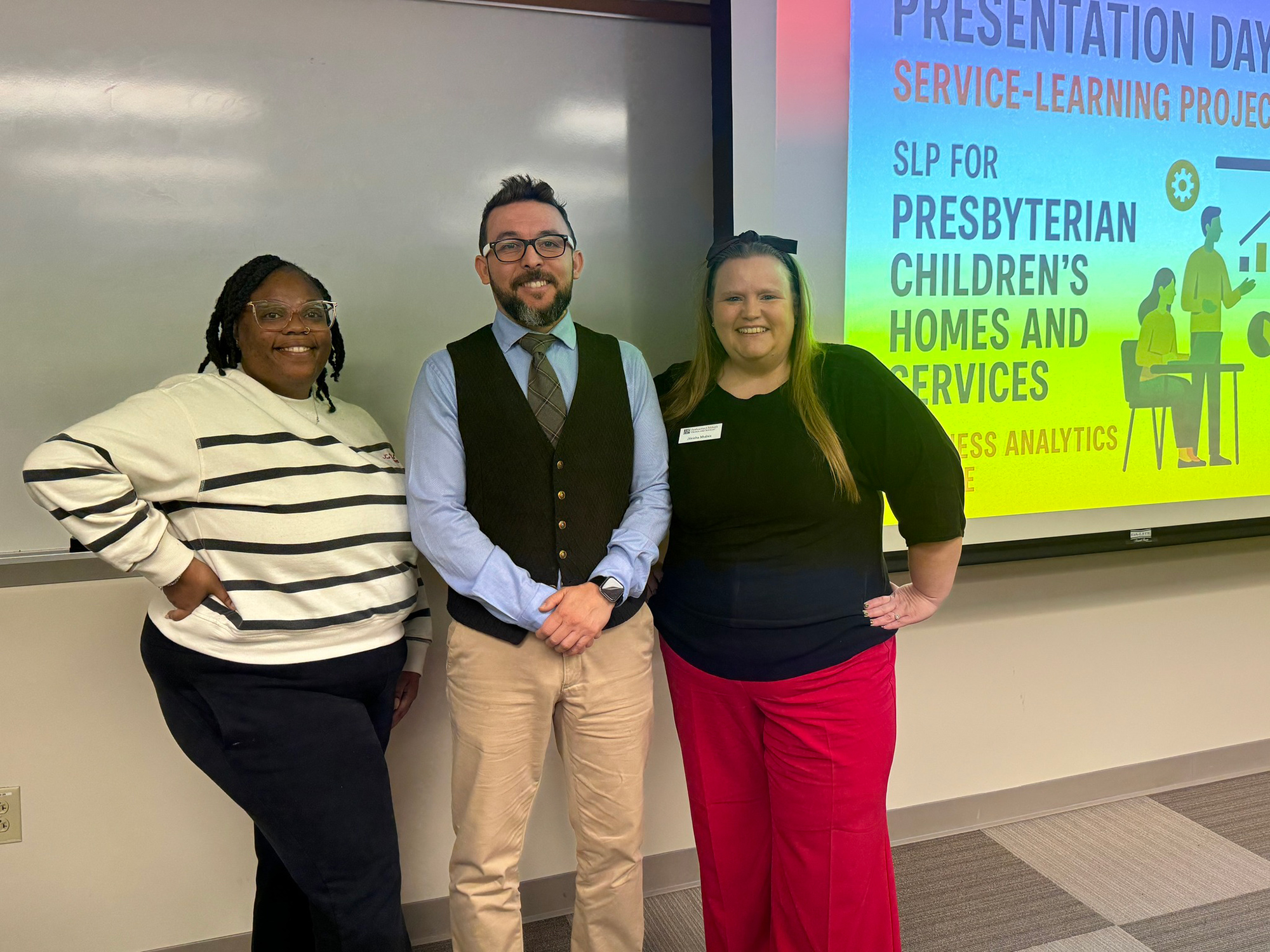
Lindenwood University students applied classroom learning to real community challenges during the Fall 2025 semester. Through service-learning partnerships with local nonprofit organizations, business analytics students used data to support meaningful community initiatives.
Led by Associate Professor Dr. Gökhan Eğilmez, students worked with the Little Bit Foundation and Presbyterian Children’s Home and Services (PCHAS). The students analyzed organizational data, using insights to serve vulnerable populations across the St. Louis region.
Following the May 16 tornado, the Little Bit Foundation supported families facing loss of housing, water and food insecurity, and disruptions to child education. The business analytics students analyzed data from 533 affected households to identify patterns across communities. Their insights helped identify the area’s most pressing needs, allowing the organization to allocate resources more efficiently.
PCHAS supports children and families in crisis, providing foster care, counseling, and transitional living to more than 4,500 children every year. Students analyzed data from the Arizona Self-Sufficiency Matrix to find patterns in demographics, program outcomes, and areas where more support was needed. Using advanced analytics, the students provided suggestions to help PCHAS better direct their resources.
Senior Alex Wolf found working with real people to be a welcome learning opportunity. “Having a real experience changed the way we approached the research and interpretations,” Wolf said. “What stood out the most was the human dimension behind the analytics.”
Noting that each data point represented a real-life story of resilience, Wolf added, “that perspective grounded the entire project for us and reminded us that effective analytics in social services must balance both quantitative variables with empathy.”
The students’ work is already having a real impact. Vice President of Organizational Impact Randy Spencer of PCHAS praised the students’ contributions. “Their analysis accurately captured the strengths and challenges faced by the staff and clients served,” Spencer said. “Several of their insights and recommendations are being used to strengthen our ongoing analysis and leadership of that program.”
Through service-learning, students strengthen the very skills they will use throughout their careers while developing an appreciation for their work’s importance. Wolf said the experience made students “more intentional, careful, and invested in the research questions and outcomes of the project.” Preparing for graduate school in the fall, Wolf plans to build on the experience to become a stronger leader and pursue more opportunities to have a meaningful impact.
Wolf is just one of 52 students who participated in service-learning under Eğilmez. Students were encouraged to consider reflection, teamwork, and real-world application of course concepts in their project. Weaving these qualities into the coursework ensured that students left with a deeper sense of civic responsibility that can only be attained through real experience.