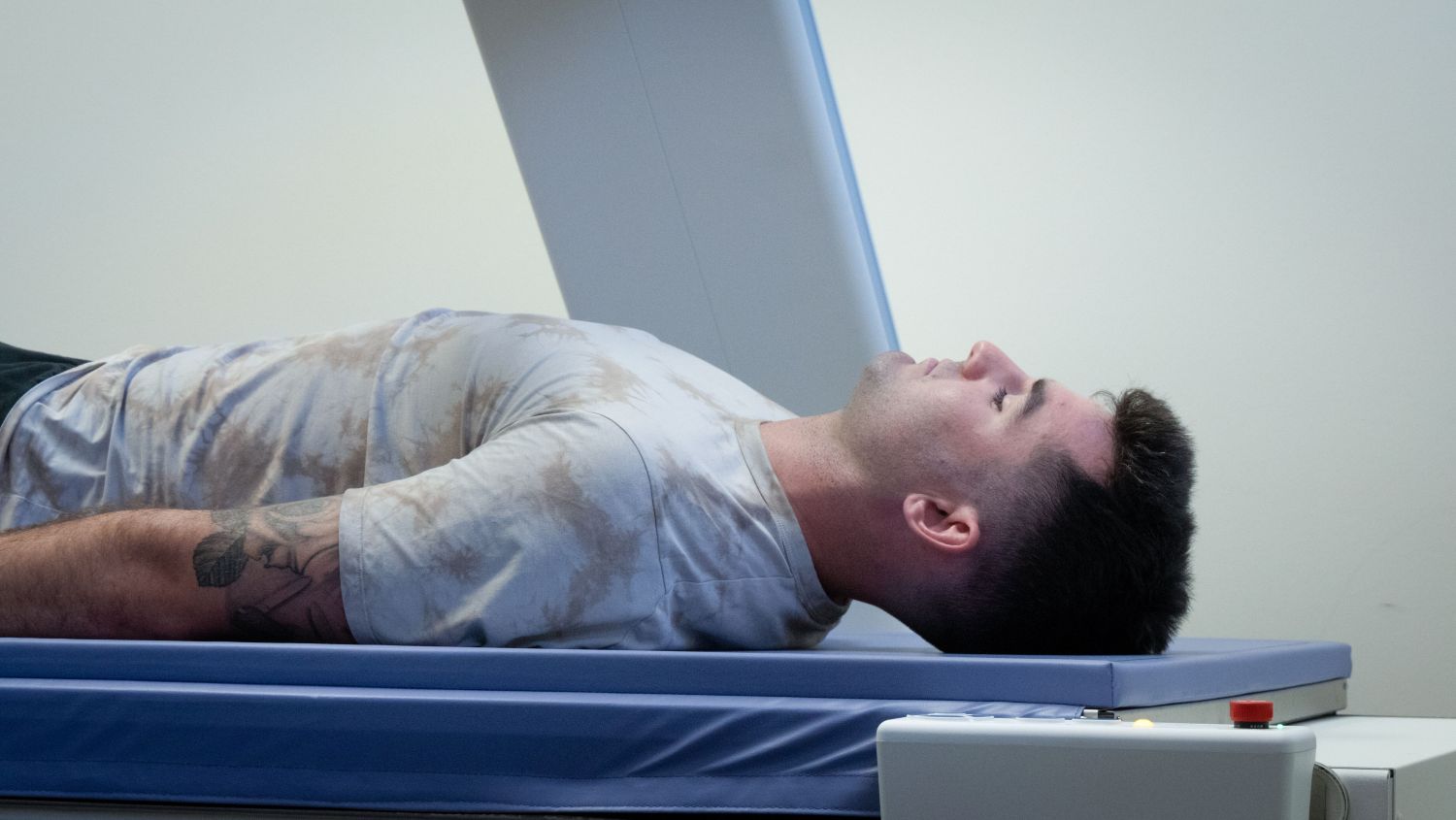
Radiologic and MRI technologists held 272,000 jobs in 2024, and the Bureau of Labor Statistics projects about 15,400 openings each year through 2034 against a median wage of $78,980. That combination, steady openings and a wage above the national median, is why the field draws career changers as reliably as it draws new students.
The path to it is more regulated than most people expect. Five requirements stand between an applicant and a first shift, and the one that trips people up is not the exam.
What a Radiologic Technologist Does
Radiologic technologists operate imaging equipment and position patients so physicians can see what they need to see. In practice the work splits three ways: patient handling, equipment operation, and radiation safety.
Patient handling is the part job descriptions undersell. A technologist positions people who are in pain, frightened, sedated, or unable to follow instructions, and gets a diagnostic image anyway. Equipment operation covers radiography, and with additional credentials, computed tomography, magnetic resonance imaging, mammography, and interventional procedures. Radiation safety governs everything, since the technologist controls the dose a patient receives.
Work settings shape the job as much as the credential does. Hospitals employ the largest share and run around the clock, which means nights, weekends, and on-call rotations for newer staff. Outpatient imaging centers and physician offices offer more predictable hours and a narrower exam mix. Trauma centers deliver the highest acuity and the steepest learning curve. Mobile imaging services send technologists to long-term care facilities and correctional sites, trading a fixed department for autonomy on the road.
A technologist also functions as the last checkpoint before an image reaches a radiologist. Recognizing that a study is non-diagnostic and repeating it correctly, catching a wrong-side order, or flagging a finding that needs immediate attention are judgment calls made in real time by the person at the console.
The role is distinct from a radiologist, who is a physician reading the images, and from a radiologic technician, a term used loosely and inconsistently across job postings. The credentialed title is technologist.
The Five Steps to Certification
Step one: complete an accredited educational program. The American Registry of Radiologic Technologists requires an associate degree or higher for certification eligibility, and the degree must come from an institution accredited by an agency ARRT recognizes.
Step two: complete clinical education. Programs embed supervised clinical rotations in hospitals and imaging centers. This is where students accumulate the documented competencies ARRT requires, covering specific procedures performed on real patients.
Step three: pass the ARRT certification examination. The primary pathway exam in radiography covers patient care, safety, image production, and procedures.
Step four: obtain state licensure where required. Licensure rules vary by state, and some states require a separate application beyond ARRT certification. Applicants should confirm requirements in the state where they intend to work before selecting a program.
Step five: maintain the credential. ARRT certification requires ongoing continuing education and periodic renewal.
Accreditation is the Step People Get Wrong
The most common mistake applicants make is assuming a school’s institutional accreditation covers its radiography program. It does not, and the distinction determines whether a graduate can sit for the exam at all.
Two separate layers apply:
Institutional accreditation covers the university. Lindenwood University has been continuously accredited by the Higher Learning Commission since 1921.
Programmatic accreditation covers a radiography program specifically, and it is held by whichever institution delivers that program. The recognized body is the Joint Review Committee on Education in Radiologic Technology, JRCERT, which ARRT lists among its recognized accreditation agencies. Lindenwood does not hold JRCERT accreditation directly. Its clinical partner does.
At Lindenwood, students in the traditional track complete their didactic and clinical radiography education through a joint affiliation agreement with the Mercy Hospital St. Louis School of Radiologic Technology. Mercy’s program holds an eight-year JRCERT accreditation award with its next scheduled review on February 1, 2027.
Anyone evaluating any radiography program anywhere should verify programmatic accreditation directly with JRCERT rather than taking a marketing page’s word for it. It is a two-minute check that protects four years.
How Long It Takes
The honest answer depends on which door a person walks through.
Entering with no prior credential. Lindenwood’s traditional track combines university coursework with a two-year didactic and clinical program delivered through Mercy. Students complete a minimum of 30 credit hours at Lindenwood before beginning clinical coursework. The 2024-2025 undergraduate catalog lists 106 credit hours for the degree. Applicants should treat total time as roughly four years.
Prerequisite coursework carries the load early: Human Anatomy and Physiology I and II, Microbiology for Health Sciences, Concepts in Chemistry, Medical Terminology, College Algebra, psychology, sociology, public speaking, and an ethics requirement including Bioethics. The four RAD blocks, Radiologic Technology I through IV at 15 credit hours each, are the Mercy clinical years.
Lindenwood states plainly that admission to the traditional track at Mercy is competitive and not guaranteed. A secondary application is required, Mercy conducts interviews, and Mercy makes the acceptance decision. The admissions page lists a March 1, 2027 deadline for the Summer 2027 cohort. Students in this track may not be eligible for merit scholarship opportunities.
Entering already certified. A working technologist who already holds the R.T.(R) credential is on a completely different clock. Lindenwood’s Radiologic Technology BS Completion Track is 100 percent online, runs one to two years, and awards up to 60 credit hours of experiential credit for the ARRT certification a student already holds. Documented U.S. military medic training or a state or national registry certification can substitute. Up to 30 additional transfer credits apply, capping incoming credit at 90 of the 120 total.
That structure exists because the clinical competency question is already settled. What the completion track adds is the coursework that moves a technologist off the scanner and into supervision: healthcare management, legal issues in healthcare, public health, global health, bioethics, and psychology of leadership.
What Clinical Years Are Actually Like
Students consistently underestimate this part.
Clinical rotations follow hospital schedules, not academic ones. That means early mornings, evening shifts, and rotations that continue through periods when campus classes are not in session. Students rotate through general radiography, trauma, surgery, portable imaging, and specialty areas, and each rotation carries documented competency requirements that must be completed on real patients under supervision.
The learning curve is steep in the first months because the classroom version of positioning assumes a cooperative patient. The clinical version does not. Students learn to adapt technique for patients who cannot stand, cannot hold still, or cannot follow instructions, and to do it without repeating the exposure.
Two practical consequences for applicants. Full-time employment alongside a clinical program is difficult and frequently impossible. And the clinical site’s location matters, because a commute that is manageable for a class schedule becomes punishing across a two-year rotation.
Associate Degree or Bachelor’s Degree
ARRT sets the floor at an associate degree, and most practicing technologists enter that way. The bachelor’s question is therefore not about eligibility. It is about ceiling.
The BLS lists an associate degree as typical entry-level education for the occupation. Advancement into imaging supervision, department management, education, applications specialist roles with equipment vendors, and clinical coordination generally does require the bachelor’s. So does most graduate study, including healthcare administration.
The practical sequence many technologists follow is to earn the associate degree, certify, start working, and complete the bachelor’s online while employed, often with employer tuition support. Lindenwood’s completion track is built for exactly that pattern.
What Radiologic Technologists Earn
Two credible sources, two useful numbers.
The Bureau of Labor Statistics reports a median annual wage of $78,980 for radiologic and MRI technologists in May 2024, with employment projected to grow 5 percent from 2024 to 2034, faster than the average across all occupations.
The American Society of Radiologic Technologists reports a radiography average of $73,274 in its 2024 wage and salary survey, up 12.3 percent from $65,246 in 2022.
The gap between the two is explained by scope. The BLS figure pools radiologic and MRI technologists, and MRI pays more. The ASRT figure isolates radiography. Both point the same direction on trend.
Earnings rise with additional ARRT credentials. Technologists who add computed tomography, MRI, mammography, or interventional radiology certifications typically command more than those holding radiography alone, and stacking credentials is a practical way to raise pay without leaving patient-facing work.
Where the Credential Can Take You
ARRT offers post-primary certification pathways that let a working technologist specialize after earning the radiography credential. Each one changes the daily job and the pay band.
Computed tomography. The most common second credential, and often the fastest return. CT volume is high in emergency and trauma settings, and cross-training is frequently supported on the job.
Magnetic resonance imaging. Longer exams, different physics, no ionizing radiation. MRI technologists sit at the upper end of the wage distribution the BLS reports for the combined occupation.
Mammography. Requires additional federal compliance training and carries strict quality standards. Predictable scheduling makes it attractive to technologists who want to leave rotating shifts.
Interventional radiology and cardiovascular imaging. Procedural work alongside physicians in a lab setting. Higher intensity, higher compensation, and the closest imaging gets to the operating room.
Bone densitometry, vascular sonography, and nuclear medicine round out the common additions.
Beyond the scanner, a bachelor’s degree opens a second set of destinations that do not involve running exams: imaging department supervision, radiology administration, clinical education and program faculty, applications specialist roles training clients for equipment manufacturers, quality and compliance, and informatics roles managing picture archiving systems. These are the positions that turn a technologist’s clinical knowledge into a management career, and nearly all of them list a bachelor’s degree as a requirement.
Graduate study is the third door. Technologists commonly move into healthcare administration, health sciences, public health, or education, and several move into physician assistant or radiologist assistant programs. A completed bachelor’s degree is the prerequisite for all of it.
Choosing Your Entry Point
If you are starting without a credential, the traditional track through Mercy Hospital St. Louis is the route, and the competitive secondary application means the calendar matters. The Summer 2027 cohort deadline is March 1, 2027.
If you already hold the R.T.(R) credential and want the degree that opens supervision and graduate study, the online completion track applies up to 60 credit hours toward your 120 and runs one to two years alongside a full-time job.Review the Radiologic Technology program options, confirm which track fits your credential status, and start the application. Verify JRCERT accreditation for any clinical program you are considering before you commit.