College of Arts and Humanities
Applied AI and Innovation Center Fellows
Applied AI and Innovation Center Fellows serve as Applied AI ambassadors and points of connection across the university. Fellows represent the distinctive perspectives, needs, and opportunities of their academic disciplines; help colleagues identify promising uses of AI in teaching, learning, research, and professional practice; share emerging practices; and serve as approachable peer resources for faculty exploring Applied AI. As new technologies and educational applications emerge, Fellows may test tools, participate in pilot studies, and contribute to discipline-relevant approaches. Fellows help Applied AI innovation circulate more effectively across Lindenwood University.
Fellow Profiles
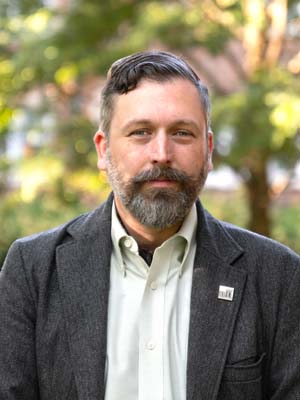
College of Arts and Humanities
Senior Professor, Art History
Specialization: Art History and Visual Culture; Applied AI; human-centered AI; cultural heritage and immersive technologies.
James Hutson explores the application of artificial intelligence across higher education, the humanities, cultural heritage, and immersive technologies, with particular emphasis on how AI can enhance teaching, research, creativity, and institutional transformation. His work includes developing and evaluating AI-enabled learning tools, examining human-centered and ethical approaches to adoption, and collaborating with faculty, students, community organizations, and industry partners on applied AI initiatives. He also researches emerging models for AI literacy, governance, workforce preparation, and discipline-specific integration, with a focus on translating rapidly evolving technologies into practical and responsible educational applications.

Specialization: Artificial intelligence strategy; geospatial technology; digital modernization; public-sector technology leadership
Applied AI engagement: Mark Munsell leads GeoSTL, a non-profit effort to expand the geospatial technology ecosystem in St. Louis, Missouri. Previously, he held roles as the National Geospatial-Intelligence Agency’s Chief Artificial Intelligence Officer, Director of Digital Innovation, Chief Technology Officer, and Deputy Director of the Chief Information Officer IT Services Directorate, where he managed a multi-billion-dollar development budget. Across these roles, Munsell facilitated innovative development aimed at transforming and modernizing software engineering and artificial intelligence technology to better serve mission partners, while also overseeing and streamlining IT-related capabilities and services.

Specialization: Political Science, Pre-Law emphasis; public policy; AI governance and student applications of AI
I use Applied AI in many of my daily workflows. For example, I have it create a curated daily news report for me to open and read in the mornings. I also use AI to create outlines, design study guides, and simulate rubric-based evaluations to get feedback on my assignments before final submission.

Plaster College of Business and Entrepreneurship
Specialization: Management; business analytics; international business; supply chain management
I integrate Applied AI into my management, business analytics, international business, and supply chain courses to help students understand how emerging technologies are changing organizational decision-making and operations. Students explore how AI can support data analysis, forecasting, supply chain optimization, market assessment, and strategic planning while also considering the limitations and managerial implications of AI-generated insights.
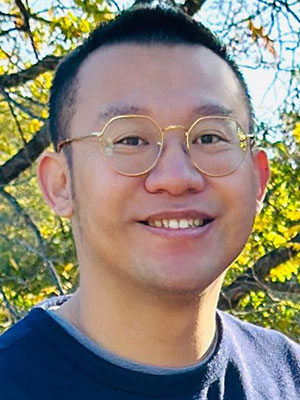
College of Science, Technology, and Health
Specialization: Computer Science; human-computer interaction; human-centered computing; spatial awareness in cross-device interaction
My work in Computer Science focuses on Human-Computer Interaction and human-centered computing, with research published in leading journals, including the International Journal of Human-Computer Interaction and Multimedia Tools and Applications. I am currently exploring how spatial awareness and AI-enabled contextual understanding can enhance human-computer interaction by enabling systems to better understand users, devices, and their surrounding environments.

Plaster College of Business and Entrepreneurship
Specialization: Management; organizational behavior; organizational change and development; AI-enabled workforce preparation
My primary focus in Applied AI is preparing students to confidently and responsibly navigate an AI-enabled workplace. I integrate AI into management education to strengthen critical thinking, decision-making, leadership, and the ability to evaluate AI-generated information. My work emphasizes developing students who can use AI effectively as a professional tool while understanding its ethical implications and evolving role in the future of work.
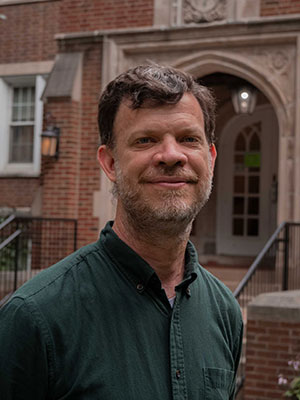
College of Arts and Humanities
Professor, English
Specialization: English and creative writing; AI and composition pedagogy; generative AI coding and scripting
My work explores how AI-assisted coding can open new possibilities for creative and scholarly work in the humanities, particularly for people without a programming background. In my applied AI courses, students and I investigate everyday applications through hands-on experiments in career planning, managing time, and developing projects of personal interest. My pedagogical interests include helping students and colleagues make informed decisions about AI through conversations that welcome skepticism, attend to disciplinary values, and connect experimentation with critical reflection.

Plaster College of Business and Entrepreneurship
Specialization: Human Resource Development; talent development; organizational workforce needs; AI and the future of work
I’m currently using AI to help refine in-class activities that relate back to assigned texts. It’s also been helpful with image production and research synthesis. I continue to explore ways to embed AI preparation for my online courses while evaluating where human connection should stay in-the-loop or on-the-loop. My research continues to review how AI is forecasted to evolve job roles and broader talent needs throughout my discipline of Human Resource Development and other business careers.

College of Arts and Humanities
Specialization: Communications; media literacy; social media marketing; digital content strategy; AI-generated media, misinformation, privacy, bias, and ethics
Applied AI has radically impacted all media industries and adapting to these new tools as well as examining their social implications is paramount in providing students with a diverse discussion of this technology. In my social media production courses, students use AI tools to develop content ideas, analyze audience data, identify trends, and use generative AI to create content. In Media Literacy, we examine how AI has impacted the human condition, identify AI-generated or manipulated content, evaluate the credibility of information, and explore issues such as misinformation, bias, privacy, and ethics in the creation of AI generated material. Together, these perspectives help students develop practical AI skills while also encouraging them to think critically about how AI is shaping the media landscape and our daily lives.

College of Science, Technology, and Health
Specialization: Athletic Training; athletic administration; clinical education; simulated-patient practice and clinical reasoning
I use applied AI as a thought partner while planning my athletic training and health sciences courses. AI helps me turn course objectives and clinical content into activities students can work through. I’ve used it to build hands-on labs, guided worksheets, and clinical cases. In those cases, students practice asking the right questions and interpreting what they find. They then have to explain the reasoning behind their decisions, rather than simply recall information.
I’m also exploring AI as a simulated patient for evaluation practice, where students can lead an interview and work through a case as information becomes available. In my own preparation, AI helps me identify unclear explanations, improve slide decks, and adapt activities to the students’ experience level and the time available. I review and revise the output using my clinical experience and teaching judgment. My goal is to use AI to create more opportunities for active practice, feedback, and clinical reasoning in the classroom.

College of Science, Technology, and Health
Specialization: Biology; microbiology and immunology; bacterial infections; cellular responses
In my courses, my students are using generative AI tools (ChatGPT, Claude, Grammarly) in developing laboratory protocols or data reviews in their biology labs. These assignments highlight the ethical use of AI tools while learning their capabilities and limitations. I am using AI myself in the development of course materials, reviewing assignment instructions, and course curriculum redesigns. These are some of my approaches to introduce the ethical use of generative AI in science education.

College of Education and Human Services
Specialization: Teacher education; disciplinary and content literacy; technology-enhanced teacher education
Michelle focuses on preparing future teachers to use AI effectively in their own teaching while also equipping them to help K–12 students use AI critically, responsibly, and thoughtfully. Her work explores how teacher preparation can move beyond simply learning about AI to helping educators use it in meaningful ways and empowering them to guide the next generation of learners in an AI-enabled world.
Shenika Harris, Ph.D.
Associate Dean, College of Arts and Humanities