College of Arts and Humanities
Communications, BA
Bachelor’s Degree offered in On-campus and Blended formats.
*On-campus format may require some online classes for degree completion.
Looking for an Online version?
Check out our Online Bachelor’s Degree in Communications.
Bachelor of Arts in Communication at Lindenwood University
In today’s connected world, skilled communicators are essential across every industry. Lindenwood University’s communications degree prepares you to tell compelling stories, build meaningful connections, and navigate the evolving media landscape with confidence. Our Bachelor of Arts in Communication blends timeless communication principles with hands-on training in emerging technologies—giving you the versatility to thrive whether you’re crafting content for social platforms, reporting breaking news, producing podcasts, or leading corporate communication strategies.
What sets a communications BA apart? It’s training that goes beyond theory. At Lindenwood, you’ll step behind the camera, stand in front of the microphone, write for real audiences, and tackle projects that mirror actual newsrooms and production studios. You’ll gain expertise in video production, radio broadcasting, journalism, public speaking, and digital media strategy—competencies that translate directly into careers where communication drives results.
Whether your classes unfold on Lindenwood’s St. Charles campus or through our online communications degree platform, you’ll experience the same rigorous curriculum taught by faculty with professional media experience. Both formats accommodate working students, recent graduates pivoting careers, and anyone looking to build a foundation in communication that adapts as platforms and industries shift.
The communications degree curriculum covers core foundations like communication theory, media literacy, interpersonal communication, and organizational communication—but it doesn’t stop there. Through electives and emphasis tracks, you can specialize in journalism or broadcast and media production, shaping your education around where you see yourself in five years.
What you won’t get is a generic media studies program. The communications degree at Lindenwood emphasizes durable skills—storytelling clarity, ethical reasoning, audience analysis, persuasive writing—that remain valuable no matter how technology evolves. Combined with practical production training and real-world projects, you’ll graduate ready to create, lead, and adapt in any communication environment.
Key Program Facts
- 36 total degree-specific credit hours: 24 core + 3 production + 9 elective (120 total credit hours needed for BA completion)
- Choose from on-campus, online, or blended delivery formats
- Located at Lindenwood’s St. Charles / St. Louis campus
- Specialize through Journalism or Broadcast and Media Production emphasis tracks
- Gain hands-on experience in professional studios, newsrooms, and media outlets
- Participate in required 0-credit seminar each fall and spring semester to build connections within the communications field and learn directly from professionals
Notable Communications Alumni
Lindenwood communications alumni have built careers across journalism, broadcasting, sports media, and creative leadership. Explore how these graduates have applied their experience to make an impact across the St. Louis region and beyond.
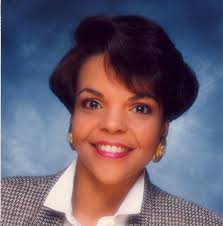
Robin Smith is an Emmy and Edward R. Murrow Award-winning journalist who built a 42-year career in television news. She later became Missouri’s first woman of color nominated by a major political party for statewide office and now works as a communications and political strategist.

Greg Amsinger is a studio host for MLB Network, contributing to coverage of the MLB Draft, All-Star Game, and World Series. His career in sports media began while he was a Lindenwood student working in radio and producing St. Louis Cardinals broadcasts for KMOX-AM.
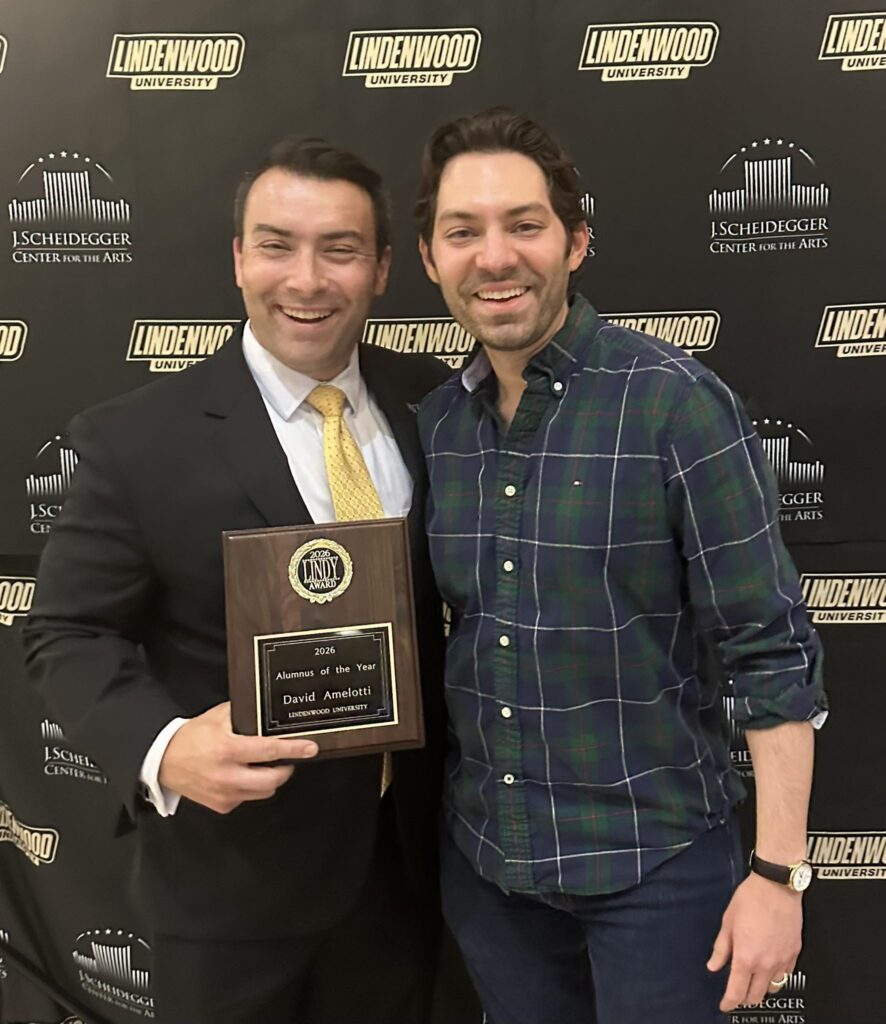
David Amelotti is an award-winning journalist, Emmy nominee, and member of the KMOV First Alert 4 Investigates team. He credits Lindenwood’s hands-on opportunities in sports broadcasting and campus events with preparing him to embrace new challenges throughout his career.
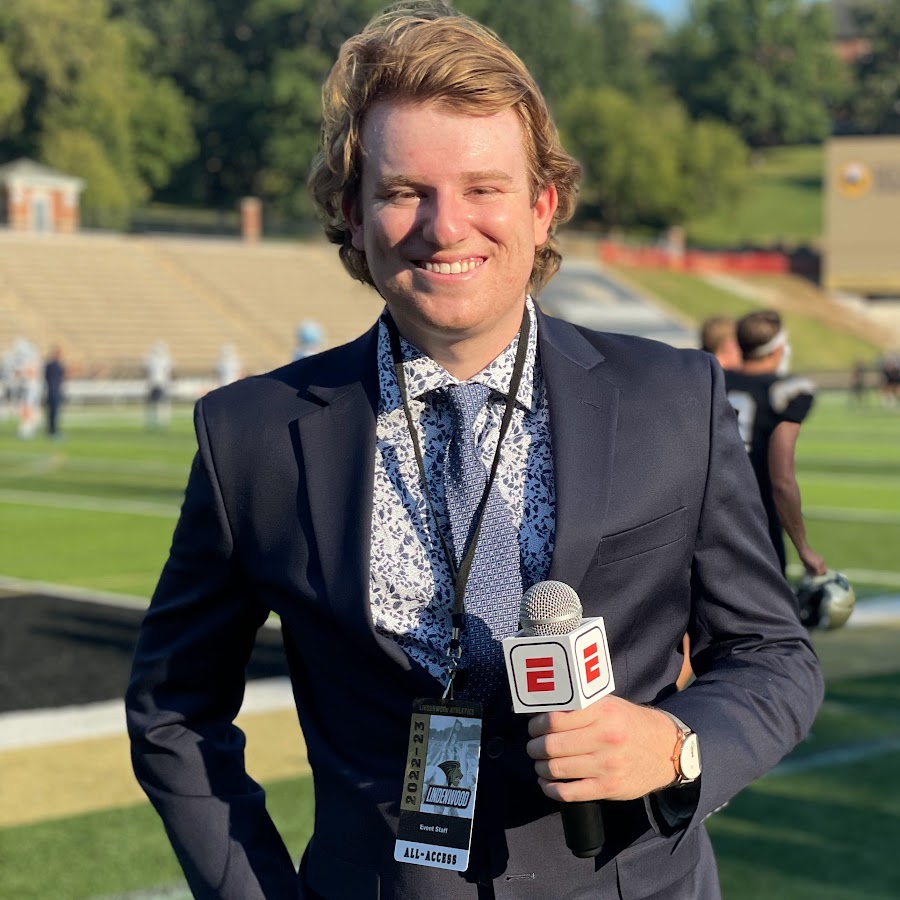
Ethan Hannaford works as a Radio Booth Assistant for the St. Louis Cardinals and as KMOX’s Clubhouse Reporter. He credits Lindenwood’s consistent broadcasting opportunities with helping him develop the preparation, confidence, and adaptability needed in professional sports media.
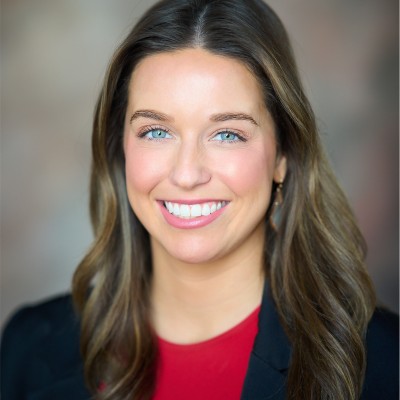
Emily Campbell is the Senior Creative Manager for the St. Louis Blues, where she helps lead creative content for the organization. She previously spent nearly a decade with the St. Louis Cardinals, producing multimedia content, supporting live entertainment, and telling stories across broadcast, digital, and social platforms.
Program Curriculum Details
Earning Your Bachelor of Arts in Communication
The Communications BA at Lindenwood is built around 36 credit hours* strategically organized into three tiers: foundational coursework, production training, and specialized electives. This structure ensures every student masters core communication competencies while developing expertise in their chosen focus area.
Core Coursework (24 credit hours): You’ll complete eight essential courses covering Introduction to Communication, Public Speaking, Organizational Communication, Interpersonal Communication, Media Literacy, Communications Law and Ethics, Communication Theory and Research, and a Capstone experience. These courses establish the conceptual framework and analytical skills that distinguish effective communicators across industries.
Production Coursework (3 credit hours): Select one production discipline to master: Video Production, Radio Production, or Podcasting Production. This requirement puts you in professional-grade studios where you’ll create portfolio-ready work.
Elective Coursework (9 credit hours): Customize your path with courses in Broadcast Journalism, Sports Reporting, Photojournalism, Writing for Media, Conflict Management, Public Relations, Multicamera Production, and more. Many students use electives to fulfill requirements for an emphasis area, while others curate a mix reflecting diverse career interests.
Complete course descriptions, prerequisites, and learning outcomes are detailed in Lindenwood’s undergraduate catalog. Students also enroll in a non-credit Communications Seminar each semester for professional development and cohort community building.
*120 total credit hours needed for completion of bachelor’s degree
Essential Skills and Insights
What makes a communicator effective? It’s not just polish or technical know-how—it’s the ability to think critically, adapt strategically, and connect authentically with diverse audiences. The communications degree at Lindenwood develops five core competency areas:
Strategic Storytelling: Learn to craft narratives that inform, persuade, and engage across written, spoken, and visual mediums
Technical Production Mastery: Operate cameras, edit audio and video, produce podcasts, and create digital content using industry-standard tools
Ethical Judgment: Navigate legal frameworks, professional standards, and ethical dilemmas that arise in journalism, public relations, and media work
Audience-Centered Thinking: Analyze communication contexts, understand interpersonal dynamics, and tailor messages to achieve specific outcomes
Research and Critical Analysis: Apply communication theory and research methods to evaluate media, assess campaigns, and support evidence-based decisions
Faculty in the College of Arts and Humanities bring years of professional experience from broadcast newsrooms, corporate communication departments, and digital media companies. Their real-world expertise informs every lesson, critique, and project assignment.
Experiential Learning, Real-World Impact
Communication skills sharpen through practice, not theory alone. That’s why the communications program embeds experiential learning throughout your coursework:
- Produce content for KCLC 89.1 FM, Lindenwood’s student-operated radio station reaching the Greater St. Louis region
- Report, write, and publish for campus media outlets that serve as training grounds for professional journalism
- Create video packages, podcasts, and multimedia projects in state-of-the-art production facilities
- Complete internships with St. Louis media organizations, corporate communication teams, nonprofits, and agencies
- Collaborate on client projects and case studies that mirror real workplace challenges
- Attend industry panels, networking events, and workshops with communication professionals
Lindenwood’s Career Services office partners with communications students to refine resumes, coordinate internships, prepare for interviews, and connect with employers. Whether you’re targeting broadcast journalism, corporate communications, public relations, content creation, or sports media, the program’s experiential components build portfolios that demonstrate readiness from day one.
Career Outlook
Communication expertise unlocks opportunities across virtually every sector. Graduates with a communications degree from Lindenwood pursue roles such as:
- News Reporter / Multimedia Journalist
- Public Relations Specialist / Communications Manager
- Content Strategist / Social Media Manager
- Video Producer / Podcast Host
- Sports Information Director / Sports Media Professional
- Corporate Communications Coordinator
- Media Relations Specialist
- Digital Content Creator / Influencer Marketing Coordinator
Post-graduation surveys show 100% of communications graduates are employed or continuing their education. According to the U.S. Bureau of Labor Statistics, media and communication occupations are projected to grow steadily, with median annual wages for public relations specialists exceeding $66,000 and reporters earning around $49,000. Specialized roles in corporate communications and digital media often command higher salaries, particularly with experience.
Degree Paths
Lindenwood delivers the communications BA through multiple formats, each offering the same comprehensive curriculum:
- On-Campus: Attend face-to-face classes at the St. Charles or St. Louis campus with direct access to studios, editing suites, and faculty mentorship
- Online: Complete all coursework remotely while benefiting from the same expert instruction and curriculum rigor
- Blended: Mix online coursework with on-campus production experiences for flexibility without sacrificing hands-on training
Emphasis Areas
Deepen your expertise by declaring an emphasis. These concentrations allow you to focus elective credits toward specialized training:
- Journalism Emphasis: Concentrate on news writing, reporting, editorial judgment, photojournalism, and investigative techniques
- Broadcast and Media Production Emphasis: Specialize in video storytelling, radio broadcasting, podcasting, and sports media
Admissions
Start your application online at https://apply.lindenwood.edu/. Admissions decisions consider academic preparation, achievements, and potential for success in communication studies.
Frequently Asked Questions
A communications degree (BA in Communication) is an undergraduate program focused on how people exchange information, build relationships, and influence audiences through spoken, written, and visual media. The degree blends theoretical foundations—such as communication theory, media studies, and rhetorical analysis—with applied skills in production, writing, public speaking, and strategic messaging. Graduates pursue careers in journalism, broadcasting, public relations, corporate communications, digital media, and related fields where clear, persuasive communication drives success.
The Bachelor of Arts in Communication requires 36 credit hours*: 24 credit hours of major coursework covering core communication concepts, 3 credit hours of production training (video, radio, or podcasting), and 9 credit hours of electives tailored to your interests. Students also complete a non-credit Communications Seminar each fall and spring semester. Course duplication is not permitted—each credit hour must represent unique content.
*120 total credit hours needed for completion of bachelor’s degree
Yes. The BA in Communication is available in three formats: fully on-campus, fully online, and blended. The online option delivers the same curriculum and faculty expertise as the on-campus version.
Lindenwood offers two emphasis tracks: Journalism and Broadcast and Media Production. The Journalism emphasis develops reporting, writing, and editorial skills for print, digital, and multimedia journalism. The Broadcast and Media Production emphasis focuses on video production, radio broadcasting, podcasting, and sports media. Both emphases use elective credits, so they don’t extend your time to graduation.
You’ll master both foundational and applied skills: professional writing and editing for multiple audiences; public speaking and presentation delivery; video and audio production using industry-standard equipment; reporting and interviewing techniques; social media strategy and digital content creation; media law and ethical decision-making; audience analysis and strategic messaging; interpersonal and organizational communication. These durable power skills remain relevant regardless of how specific platforms or technologies change over time.
Begin at https://apply.lindenwood.edu/. The admissions team reviews applications holistically, considering academic records, achievements, and readiness for college-level study. You’ll submit high school or transfer transcripts, and the university will guide you through any additional requirements. There are no program-specific prerequisites for the communications BA—you can start immediately as a declared major.
The communications degree program is based at Lindenwood’s main campus in St. Charles, Missouri (209 S Kingshighway St., Saint Charles, MO 63301), part of the greater St. Louis metropolitan area. Classes may also be held at Lindenwood’s St. Louis locations. For students enrolling online, you can complete most coursework from anywhere, though some production courses may require occasional campus visits.
Absolutely. The program offers 9 credit hours of electives, allowing you to build a course mix aligned with your career goals. Many students use electives to fulfill an emphasis in Journalism or Broadcast and Media Production, while others create a personalized blend—combining courses in public relations, sports media, conflict management, photojournalism, or digital content creation. This flexibility lets you explore diverse interests or specialize deeply in one area.
Complete course listings, descriptions, prerequisites, and learning outcomes are published in Lindenwood University’s undergraduate catalog. The catalog also includes sample four-year plans, emphasis requirements, and detailed explanations of the Communications Seminar and capstone experience.
Shenika Harris, Ph.D.
Associate Dean, College of Arts and Humanities