Skip Navigation
Date: February 27, 2026
Author: Madison Rodgers
Categories: Business
Reading Time: 5 min

From Classroom Concept to Regional Campaign: Advertising Students See Their Work on St. Louis Billboards 

If you’re driving around the St. Charles and St. Louis area and spot a Lindenwood University billboard, there’s a good chance it was created by a Lindenwood student. 

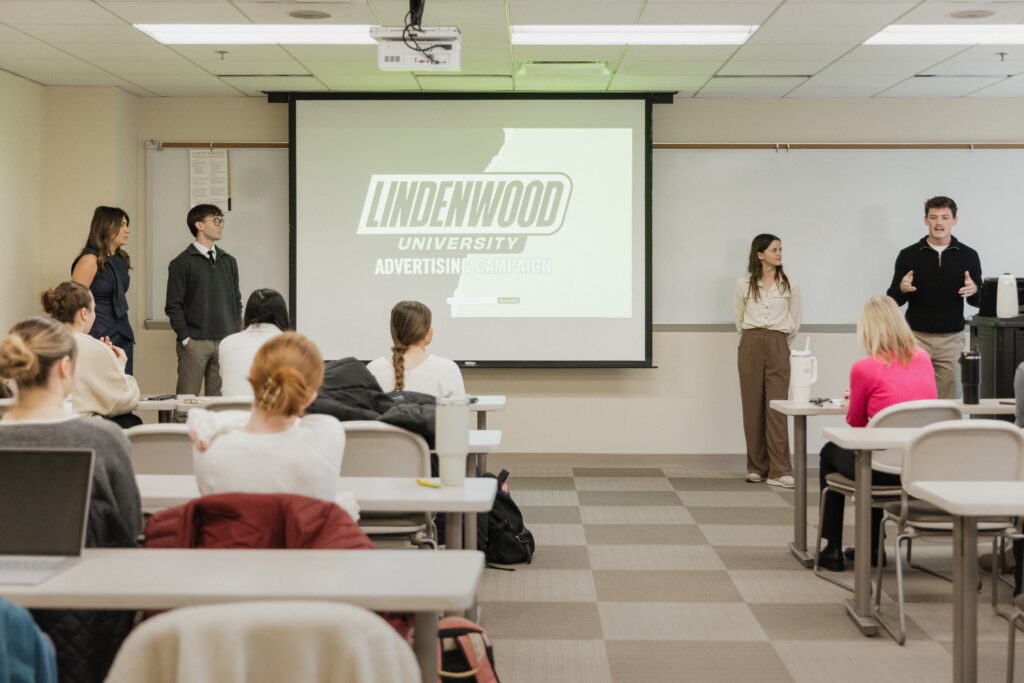
During the fall semester, students in Professor Kristy “Tucc” Tucciarone’s Advertising course were tasked with developing a full-scale marketing campaign for the University as part of a class project. What began as a classroom assignment quickly turned into a real-world opportunity when one group’s concept stood out to the University’s Marketing team. 

Their campaign moved from pitch deck to production and is now live across the region. 

Real-World Experience in the Advertising Classroom 

In the Advertising and Public Relations program, students don’t just learn theory. They apply it. Through client-based projects, campaign development, and creative execution, students gain hands-on experience that prepares them for careers in advertising, branding, digital marketing, and strategic communications. 
For this project, students were challenged to: 

  • Develop a cohesive campaign concept 
  • Create billboard-ready creative 
  • Pitch their work to marketing professionals 
  • Respond to feedback and refine their ideas 

After presenting their campaign to Lindenwood’s Marketing department, one group’s billboard designs rose to the top. 

The result? A student-created campaign displayed across the St. Louis region. 

Seeing Hard Work Come to Life 

For Cye Ham, a senior pursuing a Bachelor of Business Administration with minors in Sport Management and Marketing, the experience was unforgettable. 

“It is such an amazing feeling seeing a project I worked so hard on come to life and be actually used as a marketing campaign! I am so proud of myself and my group for what we created and can’t wait to carry the skills I learned from this campaign into my professional career!” 

The selected team included Cye Ham, Sarah Korte, Cody Lane, and Morgan VerDught. Their achievement reflects the kind of career-ready, portfolio-building work that defines the student experience within the Plaster College of Business and Entrepreneurship

A Collaboration Between Students and Professionals 

For Lindenwood’s Marketing team, this collaboration wasn’t just a class project, but a chance to partner directly with the next generation of creative professionals. 

Alley Bardon, Assistant Vice President of Marketing at Lindenwood University, shared: 

“It’s genuinely a joy to work with our marketing students. They bring fresh ideas, different perspectives, and a kind of creative energy that pushes all of us to think bigger. Watching them grow while they challenge us to grow too is such a rewarding experience.” 

Brad Hansen, Creative Director at Lindenwood University, reflected on the significance of the moment: 

“As a design student years ago, I always dreamed of seeing my work on a billboard. Being able to offer that platform to a Lindenwood Marketing student and seeing their own creative displayed is just as rewarding as my own dream coming true. I am continually amazed and inspired by the unique perspectives our students bring to our marketing efforts.” 

This collaboration highlights the power of experiential learning. Students were not creating hypothetical work. They were creating work that would represent the university in a highly visible, professional setting. 

Career-Ready Learning at Lindenwood 

Experiences like this are central to Lindenwood’s approach to education. Across programs in the Plaster College of Business and Entrepreneurship, students gain hands-on opportunities that mirror industry expectations. 

Through projects like this, students develop: 

  • Strategic thinking 
  • Client presentation skills 
  • Creative direction and design execution 
  • Collaboration and professional communication 
  • Confidence in pitching and defending their ideas 

For students in the Advertising and Public Relations program, these experiences help build professional portfolios before graduation. Seeing your work live in a regional campaign is truly a resume-defining moment.

Turning Ideas into Impact 

What began as a semester project became a real marketing campaign seen by thousands across the region. It’s a powerful reminder of what happens when creativity, collaboration, and opportunity intersect. 

At Lindenwood University, students are not waiting until after graduation to make an impact. They are doing it now. 

Interested in building campaigns that move beyond the classroom? Explore the Advertising and Public Relations program, the Bachelor’s in Business Administration, and other programs within the Plaster College of Business and Entrepreneurship to see how Lindenwood prepares students for careers in marketing, advertising, and beyond. 

Related Posts

By keyword
Loading…

Ready to Take the Next Step?

Throughout each step of your online degree program, you will receive support. From enrollment and tuition planning to staying on the right track, your support team is there to ensure your success.

Brunette woman working on creative writing project on her laptop wearing headphones
Date: February 24, 2026
Author: Joseph Baumann
Reading Time: 3 min

What Can Lindenwood’s MFA in Writing Do for You? 

The Master of Fine Arts in Writing at Lindenwood University is a vibrant, robust program of study that affords aspiring writers opportunities to work with accomplished practitioners of craft in order to grow as creative thinkers.  But in a sea of hundreds of creative writing programs, what makes Lindenwood’s special? 

Our program has no residency requirement, meaning students from anywhere in the country can complete their degree entirely online. While we offer classes with a virtual live session in each of the fall and spring terms, students are also able to take classes without ever logging into a group meeting or coming to campus!  Our courses are designed with working adults in mind, offering flexible completion windows for assignments and courseloads that balance rigor with a recognition that many of our students have full personal and professional lives. 

Pave Your Own Path 

We allow students to forge their own paths, making for a truly personalized program. Students can choose to focus on fiction, poetry, nonfiction, or writing for young adult and middle grade readers—or to choose no focus at all! But even within an area of emphasis, students have tons of flexibility when choosing their courses, with specialized topics in areas like writing horror, fantasy, science fiction, lyric essays, sonnets, and more.  We are constantly creating new classes; recent additions to our program include courses on writing interconnected stories, the prose of Margaret Atwood, and a mixed-audience workshop for writers of both young adult fiction and stories for middle grade readers. 

Leave the Program With Real Experience 

In addition, we support the university’s mission of “Real Experience. Real Success.” through our many courses in publishing and editing; students can receive course credit as editorial assistants for The Lindenwood Review, reading submissions and helping determine issue content. Through this experience, students not only have editorial experience that can give them a leg-up on the job market, they also get an insight into what happens to creative work once it’s in the publication pipeline. 

We offer other courses on publishing as well so that students feel prepared to submit their writing to magazines, agents, and presses during and after their time in the program. Whether a student wants to pursue traditional publishing with an agent and literary press, or forge their own path through self-publishing as an independent writer, or wants to learn about marketing oneself and creating a practical brand identity, we have hands-on courses that will leave any writer with the tools and materials necessary for success.  We also host talks with working writers and offer webinars on applying for academic teaching jobs.   

Apply to Lindenwood’s MFA in Writing Program Today! 

The Lindenwood MFA is a vibrant, community-oriented program where our goal is to help you tell your story, develop your voice, and launch your writing life—whatever that looks like to and for you. 

Won’t you join us? 

Related Posts

By keyword
Loading…

Ready to Take the Next Step?

Throughout each step of your online degree program, you will receive support. From enrollment and tuition planning to staying on the right track, your support team is there to ensure your success.

Date: February 24, 2026
Author: Amy Estlund
Reading Time: 5 min

Where a Public Health Degree Can Take You: Lindenwood Alumni in Action 

Graduates of Lindenwood University’s Public Health program are prepared to make an impact in a wide range of meaningful and in-demand careers. From clinical medicine and community health education to research, policy, and global health, our alumni are applying their public health training in hospitals, schools, nonprofits, health departments, and academic institutions—both across the United States and around the world. 

Below are just a few examples of how Lindenwood Public Health alumni are turning their passion into purpose. 

Clinical & Medical Pathways 

Gabi P., B.S. in Public Health ’19 

After graduating from Lindenwood, Gabi pursued her Doctor of Osteopathic Medicine at Rocky Vista University. She is currently a second-year Internal Medicine resident in Denver, Colorado, with plans to apply for a fellowship in Pulmonary and Critical Care Medicine. 

“I was able to complete my pre-medical coursework without losing sight of the deeper purpose behind it. I came to realize that my passion lay in whole-person healthcare… The integration of public health and science shaped not only my academic preparation, but also how I approach caring for patients as complete individuals rather than isolated diagnoses.”

Career Path Highlighted: 

  • Physician (MD/DO) 
  • Preventive & Whole-Person Care 
  • Clinical Medicine with a Public Health Lens 

Favorite Lindenwood Memory: Studying at the LARC or local coffee shops with endless supplies of coffee. 

Advice for Students: 

“Do the hard things. Follow your passion. Vocation lives at the intersection of your deepest interests and the world’s greatest needs.” 

Community Health & Health Education 

Maddie D., B.S. in Public Health ’19 

Maddie currently works as a Public Health Educator at the Lincoln County Health Department in Missouri. Her work focuses on maternal and child health, child injury prevention, and substance use prevention, collaborating with schools, healthcare providers, and state agencies to implement evidence-based initiatives. 

“The BSPH program provided both the technical foundation and real-world perspective I needed to step confidently into the field. The program emphasized health education, epidemiology, and community assessment — all skills I use daily. The hands-on learning experiences and community engagement opportunities helped me understand that public health isn’t just theory—it’s applied, local, and impactful. Lindenwood prepared me not just to get a job, but to lead initiatives, manage programs, and communicate effectively with diverse stakeholders.” 

Career Path Highlighted: 

  • Public Health Educator 
  • Maternal & Child Health Specialist 
  • Community Prevention & Program Management 

Favorite Lindenwood Memory: The close-knit BSPH community and meaningful faculty mentorship who were genuinely invested in our success. 

Advice for Students: 

“Take advantage of real-world experiences. Be open to discovering your niche—public health is broad and evolving. Build relationships with your professors — they are incredible mentors and connectors within the field.” 

Research, Academia & Social Justice

Bryce T., B.S. in Public Health ’20 

After earning his master’s in public health from Saint Louis University, Bryce went on to Yale University, where he is currently a PhD candidate in social and behavioral sciences at the Yale School of Public Health and a research fellow at Yale’s Center for Clinical Investigation. He is working on his dissertation and is a youth organizer and lead researcher for Hawaiʻi Peace & Justice

“I arrived at Lindenwood as a transfer student and sort of fell into public health serendipitously… For most of my time in the program, I was uncertain of my long-term goals and aspirations. However, over the course of three years, I saw [my professors] step into their classrooms, teaching all kinds of students who were invested in health equity, social justice, and a better future for communities…Being a Lindenwood BSPH student changed my relationship with reading, writing, and developing the confidence to ask expansive questions about the world… I relished in educational spaces that were creative, accessible, and enjoyable for all.” 

Career Path Highlighted: 

  • Public Health Researcher 
  • Academic & Policy Scholar 
  • Social Justice & Health Equity Advocate 

Favorite Lindenwood Memory: Being involved in the Public Health Student Association (PHSA) and organizing events. 

Advice for Students: 

“Learn to tolerate ambiguity. Sometimes the plane needs to be built while flying. Learn how to ask good questions and celebrate your unique perspectives and experiences.” 

A Degree with Endless Possibilities 

Public Health is a dynamic and interdisciplinary field—and Lindenwood alumni are proof of how far this degree can take you. Our graduates have gone on to work in roles such as: 

  • Community Health Coach (YMCA
  • Nurse (Hospitals & Health Departments) 
  • Public Health Educator 
  • Researcher & Academic Faculty 
  • Nonprofit Program Manager 
  • Policy & Advocacy Professional 

Organizations Where Lindenwood Public Health Alumni Work: 

  • Missouri Department of Health & Senior Services 
  • Local Health Departments (St. Louis County, St. Charles, St. Peters) 
  • Compass Health Network 
  • National Alliance on Mental Illness (NAMI
  • School Districts and Community Organizations 

Get Involved & Learn More 

Follow the Public Health Student Association (PHSA) on Instagram to see Lindenwood students in action or contact Dr. Amy Estlund at [email protected] to learn more about the BSPH program and career opportunities in public health. 

Public health needs thoughtful, passionate leaders—and Lindenwood graduates are answering that call. 

Related Posts

By keyword
Loading…

Ready to Take the Next Step?

Throughout each step of your online degree program, you will receive support. From enrollment and tuition planning to staying on the right track, your support team is there to ensure your success.

Date: February 24, 2026
Author: Madison Rodgers
Categories: Business, Career Support
Reading Time: 4 min

What Can You Do With an Accounting Degree? Career Paths to Consider 

If you enjoy problem-solving, working with numbers, and helping organizations make informed financial decisions, accounting offers a wide range of career opportunities. While many people immediately think of tax preparation or bookkeeping, the field of accounting is far broader and more dynamic than most realize. 

An accounting degree prepares graduates for careers in corporate finance, auditing, data analytics, government, nonprofit organizations, and beyond. Understanding your options can help you determine which path aligns best with your interests and long-term goals. 

Why Accounting Is a Strong Career Choice 

Accounting professionals play a critical role in nearly every industry. Organizations rely on accountants to interpret financial data, ensure regulatory compliance, improve efficiency, and support strategic decision-making. 

Accounting careers are known for: 

  • Strong job stability 
  • Clear advancement pathways 
  • Opportunities across industries 
  • Transferable, in-demand skills 
  • Competitive earning potential 

Because financial literacy and regulatory compliance are essential to businesses, accounting remains one of the most reliable and versatile business degrees.

Popular Accounting Career Paths 

Public Accountant 

Public accountants often work for accounting firms, serving multiple clients. They may specialize in auditing, tax preparation, or consulting. Many professionals in this area pursue CPA licensure to expand career opportunities. 

Corporate or Staff Accountant 

Corporate accountants work within organizations, managing internal financial records, preparing reports, and supporting budgeting decisions. These roles are common in healthcare, manufacturing, retail, education, and technology sectors. 

Auditor 

Auditors review financial statements to ensure accuracy and compliance with regulations. This role requires strong analytical skills and attention to detail. Courses such as auditing and financial reporting provide foundational knowledge for this path. 

Tax Accountant 

Tax professionals help individuals and organizations navigate complex tax regulations. Expertise in income tax and corporate taxation supports careers in both public accounting firms and corporate environments. 

Cost Accountant 

Cost accountants analyze production costs and operational efficiency. They help businesses determine pricing strategies and improve profitability — a valuable skill set in manufacturing and service industries. 

Government and Nonprofit Accountant 

Some accounting professionals specialize in governmental or nonprofit accounting, ensuring compliance with public-sector financial standards and grant reporting requirements. 

Accounting and Data Analytics Roles 

As technology transforms the industry, accountants increasingly rely on data analytics and accounting information systems. Professionals with skills in financial statement analysis and data-driven decision-making are especially valuable in today’s market. 

How Accounting Education Prepares You for These Careers 

A strong accounting program balances technical expertise with applied learning. Foundational coursework in financial accounting, cost accounting, auditing, and income tax builds the core competencies required in the field. 

Courses in accounting information systems and data analytics reflect the evolving nature of the profession, preparing students to work with financial technologies and interpret complex datasets. Exposure to business law and analytics strengthens decision-making skills in real-world scenarios. 

Experiential learning opportunities, such as internships, allow students to gain hands-on experience performing robust accounting duties in professional settings. These experiences help students understand workplace expectations while building their résumés before graduation. 

At Lindenwood University, the accounting bachelor’s degree integrates coursework in financial reporting, auditing, taxation, data analytics, and applied learning. This structure ensures students graduate with both technical knowledge and practical experience that employers value. 

Is Accounting Right for You? 

Accounting may be a strong fit if you: 

  • Enjoy working with data and solving structured problems 
  • Prefer organized, detail-oriented work 
  • Want a career with clear advancement opportunities 
  • Are interested in business strategy and financial decision-making 
  • Value long-term stability and professional growth 

Accounting careers can also serve as a foundation for leadership roles in finance, consulting, and executive management. 

Building Your Career With the Right Preparation 

Whether you’re interested in public accounting, corporate finance, auditing, or emerging analytics-driven roles, a well-designed accounting program provides the knowledge and experience needed to succeed. 

If you’re exploring accounting career options and want to understand how degree pathways align with your goals, speaking with a Lindenwood admissions counselor can help you determine the best next step. They can walk you through program structure, experiential opportunities, and how the curriculum supports professional preparation. 

Related Posts

By keyword
Loading…

Ready to Take the Next Step?

Throughout each step of your online degree program, you will receive support. From enrollment and tuition planning to staying on the right track, your support team is there to ensure your success.

Date: February 24, 2026
Author: Madison Rodgers
Reading Time: 4 min

Why Upskilling in Social Media Marketing Matters and How a Master’s Degree Can Help 

Social media marketing has evolved far beyond posting photos and writing captions. Today’s platforms require data analysis, audience segmentation, paid campaign strategy, visual branding, and continuous optimization. As algorithms shift and new platforms emerge, professionals who want to stay competitive must continue developing their skills. 

That is where upskilling comes in. Upskilling is the process of learning new or advanced skills to improve performance and stay competitive in your current field. 

Whether you are a marketing professional looking to advance, a business owner managing brand presence, or a communications graduate seeking specialization, building advanced social media marketing skills can expand your career opportunities and strengthen your long-term growth. 

Why Social Media Marketing Skills Are in High Demand 

Organizations across industries rely on social media to build brand awareness, generate leads, and maintain customer relationships. Success in this space requires more than creativity. It requires strategy, analytics, and measurable outcomes. 

Professionals with advanced social media expertise can: 

  • Define and analyze target audiences 
  • Interpret engagement and performance data 
  • Optimize paid and organic campaigns 
  • Develop cohesive digital branding strategies 
  • Measure return on investment 

As digital marketing becomes increasingly data-driven, employers seek professionals who understand both content creation and analytics.

Signs You May Need to Upskill 

You may want to consider upskilling in social media marketing if: 

  • You manage campaigns but want stronger data and analytics skills 
  • You are ready to move into a leadership role 
  • You feel behind on emerging platforms and technologies 
  • You want formal credentials to strengthen your résumé 
  • You are ready to move beyond entry-level social media positions 

Upskilling allows you to deepen your expertise and position yourself for more advanced roles in marketing, communications, branding, and strategy. 

What Advanced Social Media Marketing Education Looks Like 

Effective upskilling goes beyond learning the latest trends. It includes research methods, strategic planning, audience analysis, and applied project work. 

At Lindenwood University, the Social Media Marketing, MS is designed to help professionals build advanced skills in creating, analyzing, and optimizing social media campaigns. 

This 30-credit-hour master’s program combines foundational research and writing coursework with specialized training in areas such as: 

  • Digital content and demographics 
  • Emerging platforms 
  • Social media strategy and advanced strategy 
  • Visual branding 
  • Media literacy 
  • Contemporary audience analysis 
  • Digital marketing 
  • Advertising and promotional strategy 

Students develop a strong foundation in information gathering and data analysis. They learn how to define audiences, refine messaging, and measure the effectiveness of social media strategies in professional settings. 

Applied Learning Options 

The Social Media Marketing, MS offers flexibility through two completion options. 

Non-Thesis or Applied Project Option 

This option allows students to apply theories and research methods in a professional setting. Projects may involve producing strategic campaigns or materials for organizations, resulting in a tangible product that demonstrates advanced skills. 

Thesis Option 

Students interested in research or doctoral study may pursue an original scholarly investigation related to social media marketing. This path involves evaluating existing research, developing a research question, and completing a formal thesis reviewed by a committee. 

Both options emphasize real-world application and critical thinking. 

Career Paths After Upskilling 

Professionals who strengthen their expertise in social media marketing may pursue roles such as: 

  • Social media strategist 
  • Digital marketing manager 
  • Brand strategist 
  • Content director 
  • Audience insights analyst 
  • Paid media specialist 
  • Communications manager 

Because social media intersects with advertising, public relations, and business strategy, advanced training can open doors across industries. 

Is a Master’s Degree the Right Upskilling Strategy? 

Short courses and certifications can introduce new tools. A graduate degree provides deeper strategic understanding and analytical rigor. For professionals seeking leadership roles, expanded responsibility, or greater credibility, a master’s degree offers comprehensive preparation. 

The Social Media Marketing, MS at Lindenwood blends research, applied strategy, and industry-relevant coursework to prepare graduates for long-term growth. 

Take the Next Step in Your Digital Marketing Career 

If you are ready to strengthen your expertise and stand out in a competitive digital marketplace, upskilling in social media marketing may be the right move. 

Speaking with a Lindenwood admissions counselor can help you determine whether the Social Media Marketing, MS aligns with your professional goals, background, and timeline. They can guide you through program structure, completion options, and admission requirements so you can make a confident decision. 

In a field that continues to evolve, investing in advanced skills helps ensure you evolve with it. 

Related Posts

By keyword
Loading…

Ready to Take the Next Step?

Throughout each step of your online degree program, you will receive support. From enrollment and tuition planning to staying on the right track, your support team is there to ensure your success.

Date: February 11, 2026
Author: Alexandra Bardon
Categories: Business, Education
Reading Time: 7 min

Overview of the Paramedicine BS Experienced Paramedic Track

Lindenwood University offers a unique Bachelor of Science in Paramedicine through its Experienced Paramedic Track. This program is perfect for licensed paramedics eager to deepen their education and sharpen their professional skills. Since it’s all online, it fits nicely into the busy lives of emergency services professionals, allowing you to balance your studies with your existing commitments.

The curriculum builds on the solid foundation that paramedics already have, making the learning experience engaging and relevant. Here are some key components of the program you can look forward to:

  • Access to Academic Support: Students receive personalized help from academic advisors who are there to guide you every step of the way.
  • Online Learning Tools: These resources make interacting with course material more effective and accessible, helping you stay engaged.
  • Networking Opportunities: You’ll have the chance to connect with both industry professionals and fellow students, which can open doors to greater career prospects.

This supportive framework immerses students in their coursework, effectively gearing them up for a range of career paths that go well beyond just ambulance services.

Diverse Career Paths Available for Paramedics with a Bachelor’s Degree

Getting your bachelor’s degree in paramedicine unlocks a wealth of career opportunities as the field keeps moving forward. Graduates often step into leadership roles within emergency medical services, especially as organizations place more value on advanced qualifications. But it doesn’t stop there—paramedics can explore a variety of exciting alternative careers. Some popular options include:

  • Nursing: Leveraging their extensive clinical backgrounds, paramedics can pursue advanced nursing degrees to provide comprehensive care in different healthcare settings.
  • Physician Assistant Roles: After gaining some additional education, paramedics can team up with physicians to deliver quality support in various healthcare environments.
  • Health Information Technology: This growing field lets paramedics use their emergency response know-how to improve data management and healthcare tech solutions.

With a BS in Paramedicine, grads can also take their skills to exciting areas like emergency management, where they can make strategic decisions that optimize response systems. As the field evolves, employers are on the lookout for paramedics with advanced education, offering stronger job security and diverse career options, including alternative career paths for paramedics such as nurses, physician assistants, and health information technologists.

What Career Opportunities Can Open Up for Paramedics with This Degree?

Holders of a BS in Paramedicine can explore impactful roles throughout the healthcare landscape. Here are a few noteworthy positions you might consider:

  • Emergency Department Coordinators: These professionals keep hospital emergency departments running smoothly, focusing on patient flow and quality care.
  • Quality Improvement Managers: These folks concentrate on enhancing service quality within EMS organizations by using data and feedback to drive continuous improvement.
  • Health Services Managers: This role involves overseeing healthcare facilities and coordinating services to ensure optimal patient outcomes, all while sticking to relevant regulations.

The push towards higher education in emergency services has created increasing demand for individuals with advanced qualifications. Research shows that roles in emergency management and healthcare leadership look particularly promising. These positions benefit from a unique blend of hands-on clinical experience and administrative skills, paving the way for a dynamic career landscape for grads.

Salary Expectations and Job Outlook for Paramedics

Let’s talk about the financial side of things—the benefits of earning a bachelor’s degree in paramedicine are pretty significant. Graduates tend to see much higher salaries compared to those without advanced degrees. Here are a couple of highlights:

  • Experienced paramedics holding a bachelor’s degree can expect competitive salaries, especially when moving into leadership positions within EMS organizations.
  • The job market for EMTs and paramedics is projected to grow 5% from 2024 to 2034.

Specifically, paramedic roles are anticipated to see job growth around 7% until 2033. This promising outlook is driven by an expanding healthcare landscape that increasingly emphasizes pre-hospital care and effective emergency response systems.

What Does the Job Outlook Look Like for Paramedics in the Next Decade?

The next ten years look bright for employment within the paramedic field. Current statistics suggest:

  • Employment is set to grow at a rate of 5.9% from 2023 to 2033.
  • This growth is fueled by rising population demands and an increased focus on enhancing healthcare services and emergency response capabilities.

Plus, advancements in emergency medical technology and better access to healthcare will likely ramp up the need for qualified paramedics. As the field continues to shift, ongoing education and innovative practices will be essential for tackling new challenges and improving patient outcomes.

The Benefits of Earning a BS in Paramedicine for Current Paramedics

Pursuing a BS in Paramedicine not only arms paramedics with advanced skills and knowledge but also fosters significant personal and professional growth. Graduates often report much higher job satisfaction as they transition into roles that provide more engagement and opportunities for leadership. Key benefits include:

  • Leadership Development: Graduates gain insights into effective leadership practices, preparing them for significant responsibilities and mentorship opportunities within their organizations.
  • Career Advancement: The degree unlocks pathways to positions that make a real difference in patient care and the success of organizations, giving graduates a standout advantage.

One recent grad mentioned, “The knowledge I gained through the program equipped me with the tools to excel in my current role and pursue new opportunities aligned with my goals.” Testimonials like this really highlight the program’s impactful effect on career trajectories in the emergency services field.

Practical Considerations for Prospective Students

If you’re thinking about enrolling in the BS in Paramedicine program, weighing the time commitment and financial investment is essential. While online education offers flexibility, it does require you to manage your work, study, and personal life effectively. Here are a few things to keep in mind:

  • Accreditation: Make sure the program is accredited, like the one at Lindenwood University, so you know it’s recognized by future employers.
  • Support Services: Taking advantage of available resources, from academic advising to career services, can help you navigate the academic landscape and maximize your success.

To juggle these commitments successfully, consider creating a structured study schedule and seek encouragement from family and peers. A proactive approach will help you maintain a healthy balance between work and school while reaching your academic goals.

Frequently Asked Questions

A BS significantly boosts your professional knowledge and skills, opens doors to leadership roles, and enhances job satisfaction and career growth for paramedics.

Online programs are designed with flexibility in mind, allowing paramedics to study at their convenience while managing their work responsibilities.

You’ll develop advanced clinical skills, leadership capabilities, and management strategies applicable across various healthcare settings.

Graduating with a bachelor’s degree typically leads to higher salaries, especially for those aiming for leadership and specialized roles within the field.

Lindenwood University provides personalized academic advising, extensive online resources, and career services, all aimed at ensuring student success throughout your educational journey.

Absolutely! Students can work towards advanced certifications in critical care, community paramedicine, and other key areas while completing their degree coursework.

In summary, earning a Bachelor of Science in Paramedicine offers licensed paramedics great advantages, from improved career prospects to greater earning potential. With the demand for skilled professionals in emergency services on the rise, now is a perfect time to explore how advanced education can transform your career path beyond the traditional role of a paramedic. The world of emergency medicine is changing, and those who invest in their education are set to lead the way in delivering innovative healthcare. For more information about this program, check out our area of study section.

Related Posts

By keyword
Loading…

Ready to Take the Next Step?

Throughout each step of your online degree program, you will receive support. From enrollment and tuition planning to staying on the right track, your support team is there to ensure your success.

Date: February 11, 2026
Author: Alexandra Bardon
Categories: Business
Reading Time: 6 min

Definition and Overview of Police Administration

Police administration is all about creating the structure and processes that help law enforcement agencies manage their functions effectively. This framework ensures that police departments operate smoothly while meeting the diverse needs of their communities. As challenges have evolved—like the increasing demands for accountability, transparency, and community involvement—the role of police administration has also changed significantly. Today’s police administrators have the important job of strategic planning, making sure that operational goals align with community expectations while keeping the integrity of the agency intact.

In this intricate landscape, police administrators do much more than just manage. They actively engage with community members and different stakeholders to build trust and foster support. This proactive approach is crucial for enabling law enforcement agencies to tackle pressing issues, make the most of limited resources, and implement policies that prioritize the safety and well-being of the community.

Roles and Responsibilities of a Police Administrator

The main responsibilities of a police administrator can be summed up in several key areas:

  • Policy Development: Creating clear policies that guide effective law enforcement practices.
  • Budget Management: Keeping an eye on departmental budgets to ensure financial stability and proper resource allocation.
  • Staffing and Scheduling: Making sure there are enough staff members on duty to ensure public safety while optimizing how the department operates. In fact, many large police agencies are operating with staffing levels nearly 5% below those from 2019, making it harder to attract and keep qualified personnel.
  • Operational Oversight: Overseeing daily operations to meet community needs and departmental goals.
  • Accountability and Compliance: Maintaining high standards through internal investigations, performance reviews, and accreditation processes.

These responsibilities are vital for fostering an environment where public trust can flourish. By putting strong frameworks in place and adhering to professional standards, police administrators help ensure that law enforcement practices reflect what the community expects—an important factor in maintaining public confidence in the effectiveness of police work.

Additionally, open communication and collaboration within the department and with the community are essential. Police administrators need to encourage dialogue that invites community feedback and cooperation, leading to improved policing strategies and stronger community connections.

Challenges in Police Administration Today

Police administrators face a wide range of challenges today, such as:

  • Budget Constraints: Limited funding makes it tough for departments to respond effectively to the changing needs of their communities. This fiscal pressure is compounded by a combination of budget constraints, evolving community expectations, and recruitment crises in 2024.
  • Staffing Shortages: As of 2024, many large police agencies are operating with staffing levels nearly 5% below those from 2019, making it harder to attract and keep qualified personnel.
  • Evolving Community Expectations: There’s a growing call for greater transparency and accountability from law enforcement agencies.

These hurdles not only impact how well departments function but also require police to adapt to changing societal perceptions. Addressing community expectations means making significant organizational changes to ensure law enforcement practices are fair, effective, and responsive.

Furthermore, police administrators must think outside the box to recruit and retain qualified personnel while developing stronger ties with the communities they serve. Building these connections is crucial for enhancing relationships between law enforcement and citizens and fostering a culture of understanding and cooperation.

The Impact of Technology on Police Administration

The integration of technology into police administration has reshaped how departments run their operations and interact with the community. Some of the key effects of these technological advances include:

  • Data-Driven Policing: Better analysis of crime trends and resource use leads to smarter decision-making.
  • Promoting Transparency: Technology provides citizens with access to information about police activities, performance metrics, and departmental initiatives, creating a more open environment. For instance, a strategic playbook designed for police leadership emphasizes guidance on effective agency management and community engagement in 2024 (Police1).
  • Community Engagement: Digital platforms enhance communication between law enforcement agencies and the community, allowing for quicker responses to public concerns.

By adopting technology, departments can boost accountability, making it easier to track performance standards and investigate misconduct. This approach nurtures a culture of trust, where community members feel informed and engaged in policing strategies.

As police administrators embrace technology, they not only bolster their ability to tackle contemporary challenges but also improve community relationships, ultimately contributing to a safer environment for everyone.

Strategies for Effective Leadership in Law Enforcement

To foster strong leadership and accountability, police administrators can take several actionable steps:

  • Investing in Training and Development: Providing ongoing professional development helps officers gain the skills they need to navigate today’s complex policing landscape. Such investments encourage a culture of continuous improvement and ethical leadership.
  • Establishing Strong Performance Management Systems: By promoting accountability at all levels through clear expectations and regular evaluations, agencies can become more effective while enhancing overall public safety. For more on performance management, explore our insights.

By prioritizing these leadership strategies, administrators can boost operational effectiveness while also showing their commitment to upholding public safety standards. A focus on ethical practices and professional growth is critical to building trust with the communities they serve.

It’s important for police administrators to regularly assess how their leadership strategies impact both agency performance and community well-being. This ongoing evaluation helps ensure that law enforcement remains in tune with the public’s needs.

Frequently Asked Questions

The core duties of a police administrator include developing policies, managing budgets, staffing, and ensuring compliance with accreditation standards. They also oversee operational strategies and engage with the community to enhance trust and transparency.

Police administrators play a significant role in shaping community relations by promoting transparency, improving communication, and implementing community-focused policing strategies. Their efforts are crucial in building trust and fostering cooperative partnerships between law enforcement and the citizens they serve.

Modern police administrators deal with a variety of challenges, including budget limitations, staffing shortages, and changing community expectations. These issues require effective strategies to maintain accountability and transparency in policing.

Aspiring police administrators usually need a mix of educational credentials—think degrees in criminal justice or public administration—and practical law enforcement experience. Ongoing professional development is also key to effectively handling the complexities of today’s policing landscape.

Technological advancements improve data-driven policing, streamline operations, and enhance transparency and citizen engagement. By using technology wisely, police administrators can respond more effectively to community needs and improve accountability within their agencies.

Salaries for police administrators vary widely based on factors like location, experience, and agency size. Generally, these positions come with competitive pay that reflects the significant leadership roles they fulfill within law enforcement agencies.

Related Posts

By keyword
Loading…

Ready to Take the Next Step?

Throughout each step of your online degree program, you will receive support. From enrollment and tuition planning to staying on the right track, your support team is there to ensure your success.

Date: February 11, 2026
Author: Alexandra Bardon
Categories: Education
Reading Time: 7 min

Overview of Nursing School Costs and Financial Aid Options

Thinking about nursing school? It’s important to understand the financial commitment involved. The cost of nursing programs varies quite a bit depending on where you study, but you can generally expect to pay between $40,000 and $60,000 for a Bachelor of Science in Nursing (BSN) degree. On top of tuition, you’ll want to budget for:

  • Program fees.
  • Supplies and textbooks.
  • Living expenses, which can add quite a bit to your total investment.

The good news is that there are plenty of financial aid options to help lighten the load. Here are a few avenues you might consider:

  • Federal Student Aid: This includes grants, loans, and work-study programs to help make education more affordable.
  • Scholarships: Organizations like the American Association of Colleges of Nursing (AACN) offer scholarships specifically for aspiring nurses.
  • Institutional Grants: Many colleges provide financial help based on need or academic achievements.

With BSN program enrollments jumping by 4.9%, adding over 12,400 new students in 2024, it’s clear many people are finding ways to make this investment in their education. This growing interest highlights nursing’s appeal as a stable and rewarding career, showcasing how vital quality healthcare professionals are becoming.

Career Outcomes for Nursing Graduates: Statistics and Case Studies

The career outlook for nursing graduates is extremely promising. Around 95% of BSN grads land job offers within four to six months after finishing up, showcasing the high demand for skilled nurses in healthcare. Graduates can explore a wide range of job opportunities in various settings, such as:

  • Hospitals and healthcare facilities.
  • Community health organizations.
  • Educational institutions and telemedicine platforms.

Real-life stories offer great insight into the versatile career paths nursing graduates pursue. Many nurses move into roles such as:

  • Management: Stepping into leadership positions in healthcare environments.
  • Education: Teaching the next generation of nurses in academia.
  • Research and Clinical Informatics: Innovating in patient care and healthcare technology.

These paths demonstrate that a nursing degree provides valuable skills that extend well beyond traditional bedside care. The variety of opportunities not only showcases the many roads available to nurses but also highlights the dynamic and growing nature of the nursing profession, affirming its crucial role in our healthcare system.

What are the Average Costs Associated with Attending Nursing School?

Let’s dig a little deeper into the costs of nursing school. Beyond tuition, potential expenses can include fees, textbooks, and supplies. Students might discover that online programs offer some savings by cutting down on commuting and housing costs. Creating a detailed budget that reflects all aspects of their education is a smart move for nursing students, ensuring they’re ready to tackle any financial hurdles that pop up.

To ease the financial strain, actively seeking financial aid can make a world of difference. This hands-on approach can help students focus on their academics without getting bogged down by money worries.

How Does a Nursing Degree Impact Career Earning Potential?

Investing in a nursing education often pays off financially. Registered Nurses (RNs) currently enjoy a median base salary that’s projected to rise by 3% to 4% each year, reflecting the ongoing need for their expertise. This constant growth, combined with the skills you gain in nursing school, significantly boosts earning potential—making it a smart investment over the long haul.

Studies back this up, showing that nursing graduates typically see a much-improved salary compared to those without a degree. So, weighing the cost of school against the potential salary is essential for anyone thinking about nursing, as it highlights the strong economic benefits of pursuing this educational path.

Nursing Job Outlook: Understanding Demand and Opportunities

The job outlook for nursing is pretty strong, with continued growth expected in the healthcare industry. There are around 4.3 million registered nurses in the U.S., underscoring their crucial role in healthcare delivery. According to the Bureau of Labor Statistics, RN positions are projected to grow by 6% by 2031, signaling a steady demand for nursing professionals now and in the future.

Job stability is another reassuring point for anyone considering a nursing career. Retention data shows that only about 5% of new RNs leave their first job within a year. Plus, nursing ranked #10 in U.S. News & World Report’s Best Jobs list, which highlights not only the prestige of the profession but also its reliability.

Even with some challenges early on in their careers, the long-term trajectory for nurses remains overwhelmingly positive, with plenty of opportunities for growth and advancement. Nurses have the chance to shape healthcare and improve patient outcomes, making their roles both fulfilling and impactful.

Practical Considerations: What to Expect as a Nursing Student

Navigating through nursing school can be a structured yet demanding journey. For most full-time students, a BSN program takes about four years to complete, requiring a solid commitment to both academics and hands-on training. Students should brace themselves for a busy schedule that involves:

  • Theoretical coursework: Covering essential nursing concepts and practices.
  • Clinical training: Offering hands-on experience in real-world settings.

Finding the right balance between work and study can be tough, especially for those juggling jobs while attending classes. Effective time management and self-care strategies are essential for maintaining a healthy study-life balance. Many schools, including Lindenwood University, provide support systems to help students navigate through their educational journeys effectively.

How Hard is Nursing School?

Prospective students should gear up for a rigorous academic experience that demands commitment and resilience. The curriculum is intensive, spanning a wide range of topics critical for effective nursing practice. Students will face practical challenges during clinical rotations, which can be intimidating but are invaluable for gaining real-world insights into patient care. By embracing both theory and practical experience, students will be well-prepared for their careers, making the effort spent in nursing school well worth it.

Nursing Career Advancement: Pathways to Specialized Roles

Nursing presents numerous opportunities for career advancement, especially for those interested in specialization. High-paying fields like Nurse Anesthetists and Nurse Practitioners require further education and qualifications but offer notable financial rewards and the chance to make a significant impact in healthcare.

Continuing education plays a key role in moving up the career ladder in nursing. Many RNs pursue additional certifications, master’s degrees, or even doctoral programs to bolster their qualifications. In fact, over 73% of RNs hold a baccalaureate degree or higher, reflecting a shift toward advanced education in the nursing workforce. This focus on learning not only boosts job prospects but also enhances salary potential, creating a wider array of career opportunities.

Work-Life Balance: What to Expect as a Nursing Student

Balancing the demands of nursing school with personal life can be tricky. It’s essential for students to prioritize self-care and build a strong support network of peers and mentors. A structured study schedule can help carve out time for relaxation and hobbies, which is crucial for overall well-being during this intense period.

Adopting practices like mindfulness, regular exercise, and socializing can help students stay resilient and focused, making it easier to juggle academic responsibilities and personal life. Prioritizing self-care is vital not just for academic achievement but also for maintaining mental and emotional health through the nursing school journey.

FAQ Section

Absolutely! Strong job placement rates and rising median salaries make nursing school a wise choice for your future.

Lindenwood offers a range of support services, including academic resources and career counseling, to ensure students receive comprehensive help throughout their studies.

Critical thinking, effective communication, compassion, and resilience are key skills for anyone pursuing a nursing education.

Generally, a Bachelor of Science in Nursing (BSN) program requires around four years of full-time study.

Graduates can branch out into fields like administration, education, research, and public health.

Lindenwood focuses on practical training, networking opportunities, and skill development to ensure graduates are ready for successful nursing careers.

Conclusion

Investing in a nursing education brings amazing career perks, solid financial returns, and a deep sense of personal fulfillment. With impressive job placement rates and a vibrant job market, those considering nursing can feel great about their choice. As you think through your career goals and dreams, remember that a commitment to nursing can lead to a rewarding and meaningful career, shaping not just your future but also positively impacting the lives of countless patients. Embrace this chance to advance your career while making a difference in your community’s health and well-being.

Related Posts

By keyword
Loading…

Ready to Take the Next Step?

Throughout each step of your online degree program, you will receive support. From enrollment and tuition planning to staying on the right track, your support team is there to ensure your success.

Date: February 11, 2026
Author: Alexandra Bardon
Categories: Business
Reading Time: 6 min

A finance degree is a fantastic asset for anyone looking to carve out a successful career in the financial sector. With so many paths to choose from, graduates can explore a variety of roles that can lead to fulfilling and profitable careers. Lindenwood University’s Bachelor of Science in Finance provides students with the vital knowledge and skills they need to thrive in different finance positions.

Let’s dig into what you can expect after earning your finance degree, including the various career paths available, the essential skills you’ll need, salary expectations, and the exciting opportunities waiting for you in today’s ever-changing financial landscape.

Overview of Finance Career Paths With a Bachelor’s Degree

Graduates with a finance degree have a wealth of career options at their fingertips. Here are some popular paths you might consider:

  • Corporate Finance: Here, professionals dive into financial data to help businesses make informed decisions and strategize their investments.
  • Investment Banking: This role revolves around raising capital and providing advice on securities for companies and governments.
  • Financial Analysis: Experts in this area assess investment opportunities to help clients or organizations maximize their returns.

As the financial landscape shifts, new fields like fintech are opening up fresh avenues for finance careers. Jobs in fintech involve tech-driven solutions catering to financial services, including:

  • Payment processing
  • Investment management
  • Risk assessment

This fast-growing sector offers thrilling opportunities for finance graduates eager to combine traditional financial analysis with innovative technology.

Emerging Roles in Fintech and Their Relevance Today

Fintech is shaking up the financial industry, creating job opportunities that simply didn’t exist a decade ago. Some exciting careers in fintech include:

  • Blockchain Analyst: These professionals implement blockchain technology solutions to boost transparency and security in financial transactions.
  • Data Scientist: Data scientists analyze large datasets to inform financial strategies and improve efficiency by predicting market trends.
  • Fintech Product Manager: This role involves guiding the development of financial products that meet customer needs, ensuring innovative solutions align with what the market demands.

You’ll find that these positions require a mix of analytical thinking and technical skills. To stand out, fintech professionals must show strong problem-solving abilities and embrace the advanced technologies transforming financial processes.

For instance, individuals making the leap from traditional finance roles to fintech jobs can draw on their existing expertise while adapting to new methodologies that suit the digital age, boosting their adaptability and appeal in this fast-moving field.

Essential Skills for Finance Professionals

Employers are on the lookout for candidates with a solid set of essential skills, including:

  • Analytical Skills: The ability to interpret complex data and draw meaningful insights is essential for helping drive strategic business decisions.
  • Communication Proficiency: Being able to present findings and recommendations clearly to different audiences is crucial for ensuring everyone understands the message.
  • Technological Know-How: Familiarity with financial modeling, risk assessment techniques, and various software enhances employability and prepares professionals to meet industry demands.

Roles like financial analysts or risk managers require specific skill mastery. Becoming proficient in widely used tools like Excel and industry-specific software can make a big difference in your job prospects.

By focusing on building these skills early in your education, you’ll give yourself a competitive edge in the job market, making you more attractive to potential employers.

Salary Expectations for Various Finance Roles

Salaries can vary quite a bit across different finance roles. For example, the average annual salary for a private banking analyst is around $89,614, one of the higher-paying positions in the industry. Other lucrative roles include:

  • Corporate Finance Professionals: While starting salaries might be lower, they often see significant increases with experience and further education.
  • Investment Bankers: These roles commonly come with high earning potential, thanks in part to performance-based bonus structures.

Looking ahead to 2024 and 2025, the financial sector shows great promise for growth, which could lead to better compensation packages. According to the Bureau of Labor Statistics, employment in business and financial occupations is set to grow by 5% over the next decade. This trend suggests a strong job market for finance graduates, increasing the chances of securing favorable salaries and job stability.

Career Progression and Long-Term Opportunities in Finance

Career progression in finance can lead to a host of advancement opportunities. Starting in entry-level positions can eventually pave the way to roles with more responsibility, like:

  • Senior Financial Analyst
  • Finance Manager
  • Chief Financial Officer (CFO)

If you’re aiming for higher positions, furthering your education—like earning a Master’s in Finance or obtaining certifications such as CFA (Chartered Financial Analyst) or CFP (Certified Financial Planner)—can significantly boost your career prospects.

Graduates from Lindenwood University have shown impressive outcomes, reflecting a well-prepared workforce ready to excel in various financial sectors. The confidence and ambition of graduates pursuing finance careers highlight a field rich with potential and growth opportunities.

Frequently Asked Questions

A finance degree opens up numerous career paths, such as financial analyst, investment banker, corporate finance specialist, and roles in risk management and financial planning.

Employers seek key skills like analytical thinking, financial modeling proficiency, effective communication, and a solid grasp of financial software.

Salaries vary widely, but high-paying roles, like private banking analysts, average around $89,614 annually, underscoring the financial benefits of this degree.

The job outlook is promising, with a projected growth of 5% for business and financial occupations from 2024 to 2034, signaling strong demand for finance professionals.

Some popular entry-level roles include financial analyst, accounting assistant, and junior investment analyst, which can serve as stepping stones to broader career opportunities in finance.Earning a finance degree is a smart choice that prepares students for a variety of rewarding career paths. With so many opportunities and strong salary potential in the finance sector, prospective students should definitely consider Lindenwood University’s Finance Degree program. This degree not only sets graduates up for immediate employment but also lays the foundation for long-term success and satisfaction in the ever-evolving world of finance. Embracing the challenges and opportunities in this field can lead to a fulfilling career that plays a vital role in global financial stability and innovation.

Related Posts

By keyword
Loading…

Ready to Take the Next Step?

Throughout each step of your online degree program, you will receive support. From enrollment and tuition planning to staying on the right track, your support team is there to ensure your success.

Date: February 6, 2026
Author: Alexandra Bardon
Categories: Education
Reading Time: 7 min

Exploring the MFA in Writing Program

The MFA in Writing program at Lindenwood University offers a life-changing experience for aspiring writers. Focusing on personal growth and professional advancement, this program is thoughtfully crafted to equip students for the ever-changing literary landscape. In our digital world, online education has become an important way to provide high-quality writing instruction to a diverse group of learners. This blog aims to inform and inspire prospective students about the fantastic opportunities waiting for them in Lindenwood’s MFA in Writing program.

Understanding the MFA in Writing Program

Overview of the MFA in Writing Program Structure and Requirements

Lindenwood’s MFA in Writing program is both well-rounded and adaptable, typically lasting two years. Students need to complete 48 credit hours, which include core courses diving into essential topics like creative writing, literature, and editing. Plus, optional concentrations give students the chance to specialize in areas like:

  • Fiction
  • Poetry
  • Creative Nonfiction

A capstone project or thesis is a significant part of the program, enabling students to showcase their work and prove their mastery of the craft. This hands-on approach ensures students grasp theoretical concepts while also applying their skills in real-world scenarios.

The program encourages a wide range of writing styles and subjects, allowing students to develop their unique voice. Writing workshops are a vital piece of the curriculum, offering invaluable feedback that helps build confidence and enhance writing skills.

What Makes Lindenwood’s MFA Program Unique Compared to Other Online Programs?

Lindenwood’s MFA program shines with its accreditation and strong commitment to educational quality. The university takes pride in providing personalized support, including tailored mentorship opportunities for each student.

Here are a few standout features of the program:

  • Accredited Curriculum: This ensures a recognized standard of education that meets industry expectations. The National Center for Education Statistics indicates that accredited online programs are a rapidly growing segment of higher education.
  • Mentorship Opportunities: Students receive guidance from experienced professionals in the literary field, which means personalized feedback and insights.
  • Flexible Learning: Participants can set their own pace, making it perfect for busy adults trying to juggle various responsibilities.

This level of support ensures students have the tools they need to thrive in their writing careers. The program’s flexibility allows students to balance their studies with personal and professional commitments, so they can engage fully in their learning.

Key Benefits of Choosing an Accelerated Online MFA Program

Flexibility and Accelerated Learning

One of the biggest perks of Lindenwood’s online MFA in Writing is how it fits seamlessly into the lives of busy adults. This format allows working professionals and career changers to pursue their passion for writing while maintaining a healthy work-life balance. Plus, the accelerated structure means students can finish their degrees quicker than in traditional programs, which can be a game changer for those eager to dive into the literary world.

With the online learning industry projected to grow by up to 9.1% annually from 2018 to 2026, students are increasingly leaning toward programs that offer flexibility. This reflects a broader trend toward online education as not only innovative but also essential in today’s job market.

Support Services Available for Online Students at Lindenwood

At Lindenwood, online students enjoy a variety of support services designed to enhance their academic success. These include:

  • Academic advising
  • Tutoring
  • Dedicated career services

The success stories of alumni who have used these services speak volumes. Many graduates have landed jobs at major publishing houses, leveraging connections made during their studies. The university also promotes a sense of community among online students, helping to create lasting connections and networking opportunities.

Each of these support services is aimed at helping students navigate the challenges of online learning, ensuring they stay focused, motivated, and equipped to overcome any hurdles they face on their academic journey.

Career Outcomes and Literary Publishing Opportunities

What Types of Career Outcomes Can Students Expect After Completing the MFA in Writing?

Graduates of the MFA in Writing program can expect to explore a variety of career paths, including roles such as:

  • Authors
  • Editors
  • Literary agents

Alumni have successfully made their mark in notable literary careers, highlighting the effectiveness of the training they’ve received. Some have gone on to write bestselling novels, while others have secured positions in influential publishing houses.

The skills students develop during the program aren’t just valuable in the literary field; they’re also transferable to other job markets. This versatility opens doors for graduates to pursue various professions where strong writing and communication skills shine.

Literary Career Advice for Future Writers

Aspiring writers can benefit from practical tips on key aspects of their careers, such as:

  • Networking: Building relationships within the industry is key. Joining writing groups, attending literary events, and connecting with peers can lead to new opportunities.
  • Publishing: Understanding the ins and outs of publishing, whether traditional or self-publishing, is vital for any writer. Staying updated on industry trends can give a competitive edge in our increasingly digital world.
  • Self-Promotion: Learning how to market one’s work through social media or personal author websites can dramatically increase visibility and reach.

Additionally, internships or real-world experiences can enhance your portfolio and expand professional connections. Lindenwood also supports career development with helpful resources, making sure students are prepared to take their next steps in their literary journeys.

The Lindenwood Community and Values

How Does Lindenwood University Ensure the Quality and Accreditation of Its Online Programs?

Boasting nearly two centuries of educational experience, Lindenwood University is committed to maintaining high academic standards. The institution’s partnerships and collaborations enhance the program’s validity and reinforce the value of its online offerings. Accreditation serves as a symbol of quality and a promise of excellent education, ensuring that students enjoy a rich and rewarding learning experience.

The university’s focus on personalized education further strengthens its community ethos. Students are more than just numbers; they are unique individuals with distinct backgrounds and aspirations. This recognition creates a supportive atmosphere that encourages growth, creativity, and development.

Wrapping Up

Choosing Lindenwood University’s MFA in Writing program presents a wealth of advantages, from a rigorous curriculum to personalized support and flexible learning options that cater to each student’s needs. If you’re considering this exciting journey, we warmly encourage you to explore the program and discover how it can benefit you. The world of writing is calling—through dedication, passion, and the support of Lindenwood, you can turn your literary dreams into a gratifying career.

FAQs

The application process involves submitting an online application form, academic transcripts, a writing sample, and two letters of recommendation. You can find more specific details on Lindenwood’s website, where prospective students can browse additional materials and resources to guide them.

Effective time management can be achieved by:

  • Setting a consistent schedule to establish a work routine
  • Prioritizing tasks based on deadlines and importance
  • Using course resources wisely to boost productivity

Additionally, connecting with fellow students and faculty can provide extra support and create a sense of accountability. Implementing these strategies can help maintain a productive workflow throughout the program.

Absolutely! Lindenwood offers various financial aid options, including scholarships specifically designed for online students. Prospective students should check the financial aid section of the university’s website for more information and ensure they take full advantage of the resources available.

To participate in the online program, students generally need a reliable computer, stable internet access, and basic software for word processing and communication. Familiarity with online learning platforms is also helpful for ensuring a smooth and successful educational experience.

Lindenwood promotes community through virtual interactions, online discussion forums, and networking events. This approach helps students build relationships with peers, faculty, and alumni, creating a supportive network that goes beyond the classroom. Participating in these activities enriches the academic experience and fosters lasting connections in the literary world.

Related Posts

By keyword
Loading…

Ready to Take the Next Step?

Throughout each step of your online degree program, you will receive support. From enrollment and tuition planning to staying on the right track, your support team is there to ensure your success.