

Curious about environmental issues? Wondering how you can make a difference? Environmental Science could be the degree for you! Environmental scientists make the world a safer and healthier place for humans and wildlife!
Bachelor of Science (BS) offered in On-campus formats.
*On-campus format will require some online classes for degree completion.
St. Charles / St. Louis
Environmental Science (BS)
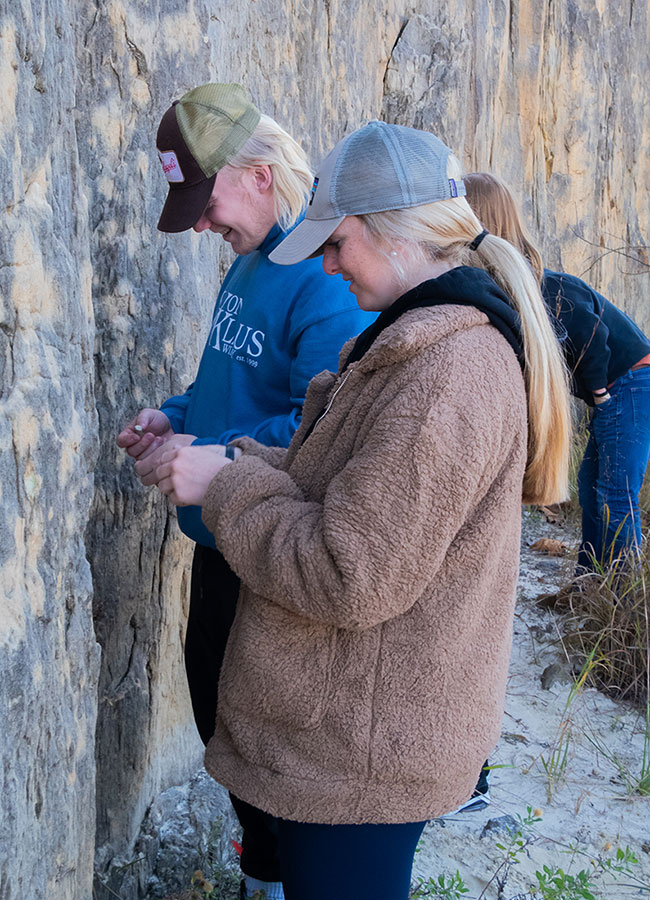
Lindenwood University offers one of the greater Saint Louis/Saint Charles region’s strongest and most technically focused Environmental Sciences B.S. programs, equipping students with the scientific and analytical expertise needed to understand and solve complex environmental challenges. Our program is firmly grounded in rigorous technical training while emphasizing principles of sustainability—such as responsible resource management and long-term environmental stewardship.
Students gain in-depth experience in the physical, chemical, and biological processes that govern environmental systems. Core coursework and hands-on field experiences build strong competencies in:
- Water Resources & Hydrology: stream gaging, watershed analysis, groundwater dynamics, water-quality monitoring, and geophysical methods.
- Soil Science: soil formation, classification, hydrologic function, erosion processes, and the movement and behavior of chemical contaminants in soil environments.
- Environmental Risk Assessment & Environmental Health and Safety: human and wildlife exposure analysis; toxicology; environmental compliance; and data-driven evaluation of risks to human and ecological health.
Technical training is further enhanced through the program’s integration of GIS and geospatial methods, enabling students to collect, analyze, and visualize spatial data critical for land-use planning, environmental monitoring, habitat mapping, and resource management.
By earning your B.S. in Environmental Sciences at Lindenwood University in St. Charles, Missouri, you will be prepared for careers in environmental consulting, water resource management, soil and ecological assessment, sustainability planning, geospatial science, and Environmental Health & Safety (EHS). The program also provides a strong foundation for graduate study in specialized environmental fields.
Lindenwood’s faculty—experts in soil science, hydrology, contaminant fate and transport, ecology, risk assessment, geology, and geospatial technologies—ensure that students receive high-level technical instruction informed by real-world research and professional practice. Minors in Environmental Health and Environmental Sciences are also available for students seeking to complement other scientific or professional programs.
Earning a Degree in Environmental Science from Lindenwood University
A bachelor of science (BS) degree in Environmental Science requires a general education core curriculum, plus 74 credit hours in subject-specific course. You will study subjects like biological diversity, environmental policy, hydrology, chemistry, and many more.
What Can You Do with a Degree in Environmental Science from Lindenwood University?
- A career in the private sector working with industry to ensure compliance with environmental regulations and permits, including Environmental Health & Safety (EHS) standards. Professionals in this area help organizations reduce risk, manage waste, monitor emissions, and implement sustainable operational practices that protect both human health and the environment.
- Working for an environmental consulting firm to investigate hazardous waste sites, assess risks to soil, water, and ecological systems, and provide science-based recommendations for cleanup and remediation. This often includes conducting EHS evaluations, monitoring contaminant exposure pathways, and designing strategies that safeguard community health.
- A position with a federal or state regulatory agency to ensure that environmental and EHS regulations are followed and enforced. These roles involve reviewing permits, conducting inspections, evaluating environmental data, and ensuring compliance with water quality standards, hazardous materials management, and workplace environmental safety laws.
- A career with an environmental advocacy or conservation organization focused on environmental stewardship and sustainability. Professionals may monitor environmental and wildlife conditions, evaluate ecosystem health, engage with communities, and advocate for policies that integrate conservation with public and occupational health protections.
- An academic or research-focused career, pursuing advanced study to develop new methods for assessing environmental hazards, evaluating risk, and designing remediation technologies. This path also supports the advancement of sustainability science and EHS best practices, contributing to improved environmental protection and healthier communities.
Contact the Earth Science Department at Lindenwood University
View the Environmental Science faculty. For more information about the Environmental Science bachelor of science program at Lindenwood, please contact Dr. Jennifer Firestine at (636) 949-4188 or jfirestine@lindenwood.edu.